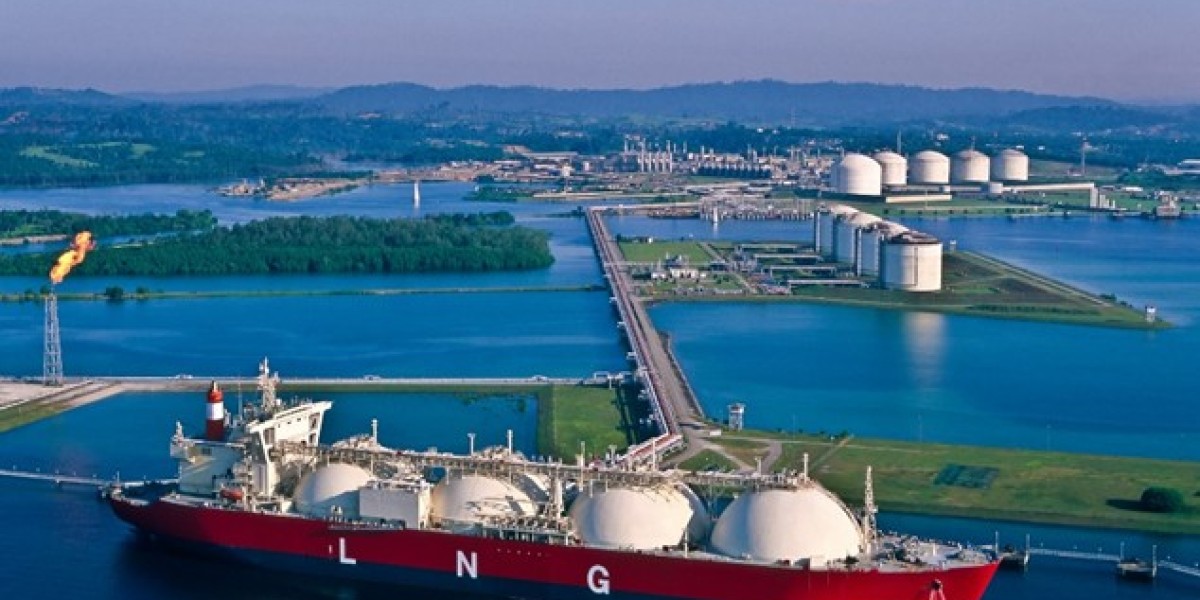

Natural gas, as a crucial clean energy source, is playing an increasingly significant role in the global energy mix. With the continuous growth of the economy and the heightened focus on environmental protection, the demand for natural gas is on the rise. This article aims to provide an in-depth analysis of global natural gas reserves, exploring their distribution, the leading reserve-holding countries, and future development trends.
I. Overview of Global Natural Gas Reserves
According to relevant data, the world is abundant in natural gas reserves, with a total of approximately 6.2 trillion cubic meters, equivalent to 1.52 trillion tons of oil equivalent. This accounts for 36% of the global energy reserves, making natural gas the largest energy reserve globally. The majority of these reserves are concentrated in Russia, the Middle East, and the Americas, with each region holding over one-third of the global total.
II. Top Ten Countries in Global Natural Gas Reserves
When it comes to the ranking of natural gas reserves globally, Russia, Iran, and Qatar top the list. These three countries collectively control 51% of the world's proven natural gas reserves, holding about 3.7 trillion cubic feet out of the global total of approximately 7.3 trillion cubic feet. Below is a table showing the top ten countries in terms of natural gas reserves:
表格
| Country | Reserves (trillion cubic meters) | Reserves (trillion cubic feet) |
|---|---|---|
| Russia | 47.8 | 1688 |
| Iran | 33.9 | 1200 |
| Qatar | 23.8 | 843 |
| United States | 17.4 | 615 |
| Turkmenistan | 11.3 | 400 |
| Saudi Arabia | 9.9 | 336 |
| United Arab Emirates | 8.6 | 290 |
| China | 6.7 | 265 |
| Nigeria | 5.7 | 209 |
| Venezuela | 5.7 | 195 |
As shown in the table, Russia holds the largest proven natural gas reserves globally, at 47.8 trillion cubic meters, which is 40% higher than Iran and almost three times that of the United States. Iran and Qatar follow closely, ranking second and third respectively, and these three countries dominate the global natural gas reserves.
III. Analysis of Major Natural Gas Reserve Countries
(i) Russia
Russia not only leads in natural gas reserves but also has a natural gas industry that is a vital pillar of its economy. Russia's natural gas reserves account for about 20% of the global total, giving it significant influence in the global energy market. The majority of Russia's natural gas is located in the Siberian region, and its well-developed natural gas extraction and transportation infrastructure allows it to export large quantities of natural gas to Europe through pipelines.
(ii) Iran
Iran ranks second in the world in terms of natural gas reserves, holding about 17% of the global total. The majority of Iran's natural gas resources are concentrated in the Persian Gulf region, and the development of its natural gas industry is of great significance to Iran's economic development and energy security. Iran has certain technical capabilities in natural gas exploration and extraction, but its natural gas development and exports are somewhat restricted due to international sanctions.
(iii) Qatar
Qatar, a small country in the Middle East, ranks third in the world in natural gas reserves, accounting for about 13% of the global total. The majority of Qatar's natural gas resources are concentrated in the North Field, which is the largest natural gas field in the world. Leveraging its abundant natural gas resources, Qatar has vigorously developed its liquefied natural gas (LNG) industry and has become one of the world's largest LNG exporters, with its natural gas exports mainly directed towards the Asian and European markets.
(iv) United States
The United States ranks fourth in the world in terms of natural gas reserves. Although its reserves are not as large as those of Russia, Iran, and Qatar, the United States is the world's largest natural gas producer, accounting for about 23% of the global natural gas production. The majority of the United States' natural gas resources are located in Texas and Pennsylvania. The country is at the forefront of shale gas extraction technology, and the substantial extraction of shale gas has led to a significant increase in U.S. natural gas production. This not only meets domestic demand but also makes the United States an important natural gas exporter.
(v) China
China ranks eighth in the world in terms of natural gas reserves. With the rapid development of its economy, China's demand for natural gas is also growing continuously. The majority of China's natural gas resources are located in the western regions, such as the Tarim Basin and the Ordos Basin. In recent years, China has increased its efforts in the exploration and development of natural gas resources and is also actively developing unconventional natural gas resources such as shale gas. China's natural gas industry plays an important role in ensuring national energy security and promoting the adjustment of the energy structure.
IV. Future Trends of Global Natural Gas Reserves
Overall, global natural gas reserves and production are still on the rise, but the growth rate is becoming increasingly slow. From 2000 to 2017, global natural gas reserves increased by 43%, while production increased by about 20%. It is projected that the growth of global natural gas reserves and production will continue to slow down in the future.
With the advancement of technology and the increased focus on environmental protection, the development of unconventional natural gas resources such as shale gas and coalbed methane will become an important source of future natural gas reserve growth. In addition, the global demand for natural gas will continue to grow, especially in emerging economies in Asia, where the proportion of natural gas in the energy consumption structure will continue to increase.