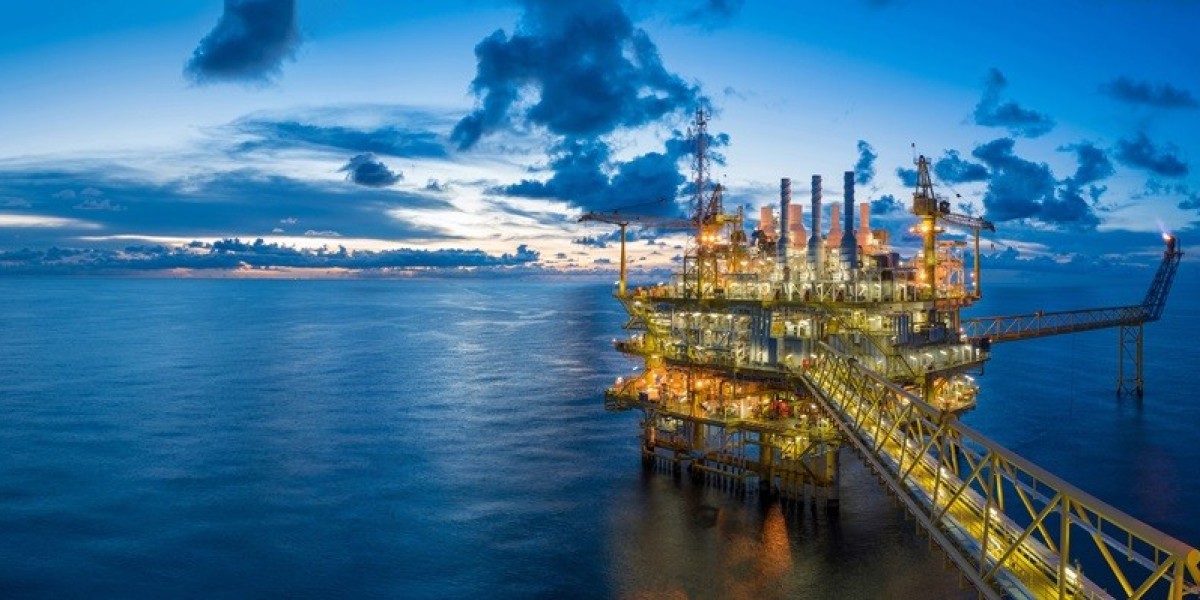

A modular processing unit is a pre-engineered, skid-mounted gas treatment system designed and assembled in a controlled factory environment. These units are then transported to offshore platforms as complete, integrated packages, arriving 80–90% complete and requiring only final connections and commissioning. This contrasts sharply with traditional offshore facilities, which are constructed entirely on-site and often face significant delays due to harsh marine conditions and logistical challenges.
Modular units are designed with standardization in mind, allowing manufacturers to produce proven designs that fit most offshore gas applications. This approach mirrors the efficiency of automotive assembly lines, where repetition and consistency lead to significant time and cost savings.
The Challenges of Offshore Gas Production
Offshore gas projects face unique challenges that traditional infrastructure methods often fail to address effectively. Harsh marine environments, logistical constraints, and volatile market conditions all contribute to the complexity of these projects.
Harsh Marine Environment
Offshore platforms are exposed to extreme weather conditions, corrosive saltwater, and high winds. Traditional construction methods are prone to delays due to weather-related issues, and materials are susceptible to corrosion, leading to higher maintenance costs.
Logistical Constraints
Offshore locations often have limited access, making it difficult to transport large construction crews and materials. Mobilizing resources can cost 50–70% more than onshore projects, significantly increasing project expenses.
Capital Efficiency Pressure
Due to volatile oil and gas prices, operators demand shorter payback periods, typically under three years. Traditional offshore facilities, which can cost $20–30 million, often struggle to meet this target, especially when production volumes are uncertain.
Regulatory Complexity
Stricter emissions standards, particularly for volatile organic compounds (VOCs) and methane, require sophisticated control systems. Modular units can integrate these technologies during factory assembly, ensuring compliance from day one.
How Modular Units Transform Offshore Gas Production
Modular processing units offer several key advantages that address the challenges of offshore gas production, making them a compelling alternative to traditional methods.
Accelerated Time to Production
Traditional offshore gas processing facilities follow a sequential process that can take up to 32 months from design to commissioning. Modular units, however, compress this timeline significantly. By leveraging parallel engineering—where factory manufacturing runs concurrently with site preparation—modular units can be commissioned in as little as 12 months. This accelerated timeline reduces project risk and improves cash flow.
Capital Cost Savings
Modular units offer substantial cost savings compared to traditional facilities. Factory-controlled fabrication reduces labor costs, centralized procurement improves material management, and pre-testing minimizes commissioning issues. These factors contribute to a total capital expenditure reduction of up to 40%. For example, a 75 MMscfd capacity project could see savings of nearly $10 million by choosing modular over traditional construction.
Operational Flexibility
Perhaps the most underrated advantage of modular units is their adaptability. Offshore gas production is inherently uncertain, with actual well output often diverging from forecasts. Modular architectures allow operators to align infrastructure with real conditions rather than betting on projections. Phased deployment strategies enable scalable solutions that can be adjusted based on production performance. Additionally, modular units can be redeployed to new drilling areas, retaining significant resale value and providing operational flexibility throughout the asset lifecycle.
Choosing the Right Approach
When deciding between modular and traditional offshore gas processing solutions, several factors should be considered:
- Production Volume: Modular units are preferred for projects below 125 MMscfd, where economies of scale for traditional facilities are less pronounced.
- Project Timeline: Modular units are ideal for projects requiring first gas within 15 months, whereas traditional facilities may take over 20 months.
- Production Certainty: Modular units offer greater flexibility for projects with high production decline rates or uncertainty.
- Location: Modular units are better suited for remote offshore locations with limited infrastructure.
- Capital Availability: Modular units require less upfront capital, making them ideal for projects with limited CAPEX budgets.
- Future Plans: Modular units provide greater flexibility for projects with multiple development areas or uncertain future requirements.
Conclusion
Modular gas processing technology has evolved from an experimental concept into a mainstream solution for offshore gas production. For most applications, modular units offer comparable performance to traditional facilities but with significant advantages in speed, cost, and flexibility. As technology continues to advance, incorporating advanced automation and emissions monitoring, modular units are becoming the default choice for offshore gas projects. For developers, the strategic takeaway is clear: Evaluate modular options first, as they can save time, money, and resources while delivering reliable and sustainable solutions.
References
- Offshore Market Research. (2024). Modular Gas Processing Market Size, Share & Trends Analysis Report.
- Offshore Analytics. (2023). Offshore Midstream Infrastructure Cost Benchmarking Study.
- U.S. Energy Information Administration. (2024). Annual Energy Outlook 2024 with Projections to 2050.