In the evolving landscape of maritime infrastructure, the rise of offshore floating terminals, moored platforms, and non-traditional docking facilities has led to the necessity of customized mooring bollards. These are specifically engineered to meet the unique demands of floating structures — far beyond standard quay-based use.
Offshore floating terminals typically face harsher environmental conditions than conventional docks: stronger currents, larger tidal ranges, wave action, and sometimes complex mooring line geometry. Standard dock bollards may not suffice under such conditions. That’s where tailored marine bollard designs come into play.
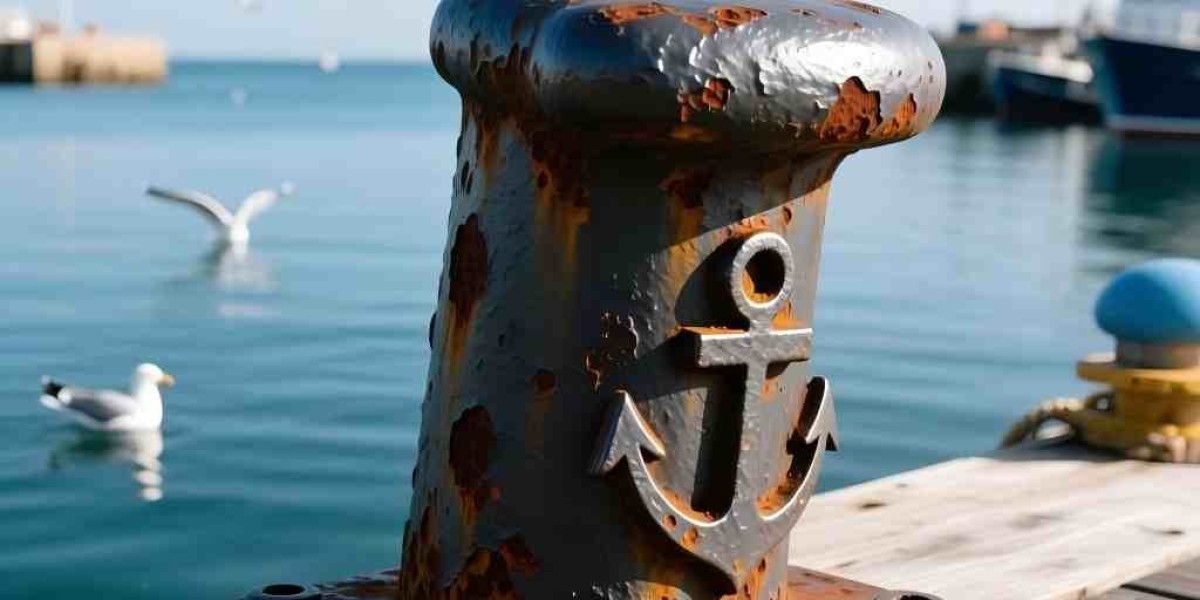
Customized mooring bollards for offshore applications are engineered with considerations such as higher load capacity, enhanced corrosion resistance, and modified geometries for optimal line alignment under variable loading. For example, for a floating terminal used in oil/gas operations or heavy-cargo transfer, a double-bitt or specialized high-capacity bollard can give the required robustness to withstand strong lateral forces or turbulence.
Material choice becomes even more critical. Bollards may be built from ductile iron or high-grade steel, often treated with protective coatings to resist corrosion from saltwater and marine environments. Further, the connection between bollard and the floating structure must be carefully designed — the base plate and foundation must accommodate movement, dynamic loads, and potential fatigue due to constant motion.
Customization also allows for flexibility in mooring configurations. In floating terminals, multiple mooring lines at different angles, dynamic positioning, and variable loading scenarios are common. A well-designed bollard system can accommodate such complexity, offering multiple attachment points or flexible horn geometry tailored to the terminal’s layout.
Finally, adopting customized mooring bollards enhances safety and operational efficiency. Properly designed bollards reduce the risk of line slippage, overload, or failure — which is critical when transferring heavy loads or handling large vessels in challenging offshore conditions. They also extend the service life of mooring equipment, lowering maintenance frequency and cost.
In essence, the shift toward offshore floating terminals and non-standard berthing environments demands more than off-the-shelf solutions. Customized marine bollards represent a necessary adaptation — combining engineering, materials science, and design flexibility to ensure secure, stable, and efficient mooring in even the most demanding circumstances.