
Introduction: Bridging the "Try-On" Gap Across the Screen
The exponential growth of the internet has firmly established online shopping as the dominant consumer model. However, for the apparel retail sector, a fundamental challenge has persisted: How can we accurately determine if a garment's size, fit, and aesthetic appeal are right for the customer, all from behind a digital screen?
Just as Augmented Reality (AR) has revolutionized online experiences in home decor and beauty (as noted by trends in the industry), the "lack of physical interaction" in clothing purchases has historically led to high return rates and consumer uncertainty. Fortunately, the integration of cutting-edge Artificial Intelligence (AI) technology, specifically through AI Fitting Rooms (or Virtual Try-On), is emerging as a revolutionary force to overcome this limitation.
Section 1: The AI-Powered Virtual Try-On Revolution
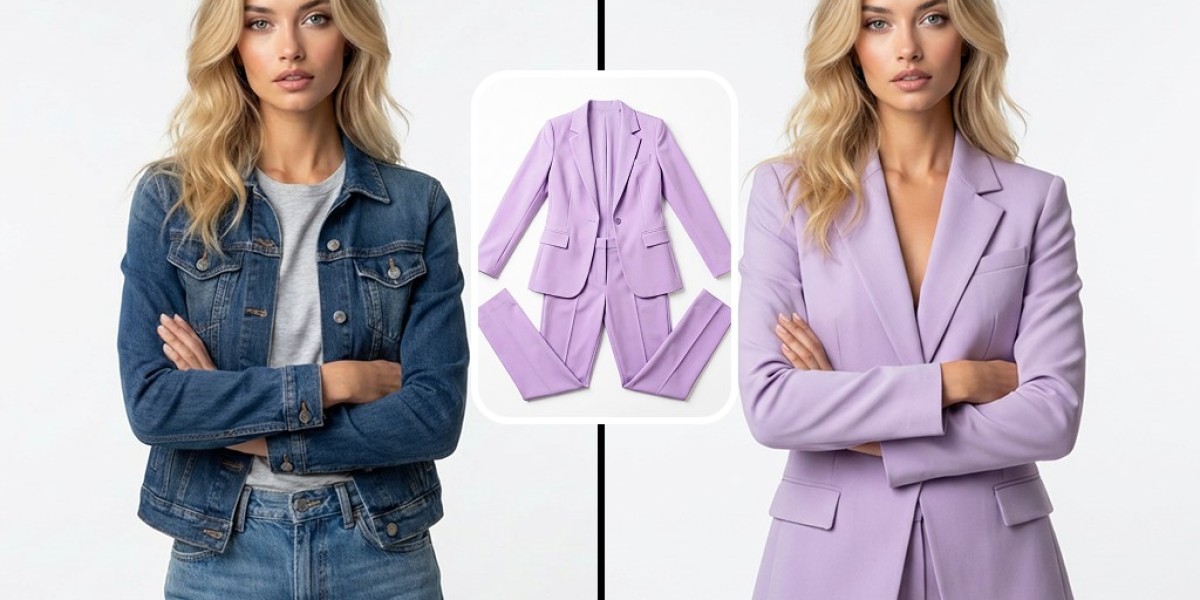
An AI fitting room is far more sophisticated than simple image overlay. It is a technical system built upon Computer Vision, Deep Learning, and High-Fidelity Rendering . Its core function is to accurately fuse the virtual garment with the human body in a virtual environment. This is achieved by leveraging user-uploaded photos or real-time camera data, combined with sophisticated modeling of the garment's physical properties, such as fabric drape, texture, and how it reacts to virtual light.
This "AI Clothes Changer" technology delivers a highly realistic try-on experience, allowing consumers to visualize various styles and colors on their own bodies in seconds. It dramatically enhances the efficiency of the decision-making process, transforming the traditional uncertainty of online shopping into instant, visual confidence.
Section 2: Dual Value for Consumers and Retailers
The benefits introduced by virtual try-on technology are two-fold:
For Consumers: Boosting Confidence and Experience Customers no longer need to rely solely on model photos or guesswork. They can "try on" dozens of items comfortably at home, accurately gauging size and fit. This significantly reduces the likelihood of returns caused by poor sizing or stylistic dissatisfaction. This immersive, personalized experience measurably increases shopping satisfaction.
For Retailers: Optimizing Operations and Conversion Rates Exorbitantly high return rates are a major financial drain for e-commerce platforms. AI try-on solutions effectively address fit issues pre-purchase, directly cutting down on logistics and warehousing costs. Moreover, when customers feel greater certainty about their purchase, cart conversion rates naturally increase, delivering tangible economic benefits and a competitive edge to retailers.
Section 3: Industry Adoption and the Rise of Efficient Tools
As AI technology matures, more major brands are deploying custom virtual try-on solutions. However, for small and medium-sized enterprises (SMEs), the key challenge in their digital transformation is how to quickly and affordably integrate a high-quality AI fitting capability.
This is where specialized tools focused on professional virtual try-on services come into play. They aim to transform complex AI models into easy-to-embed commercial solutions. For example, platforms like YoChanger focus on providing hyper-realistic, readily accessible AI clothing replacement services. These tools allow merchants to swiftly establish a professional virtual fitting room on their e-commerce website or application. The proliferation of such tools significantly accelerates the adoption of AI try-on, making cutting-edge technology accessible to apparel e-commerce businesses of all sizes.
Conclusion: The New Standard for Future Retail
The AI fitting room is more than a novel feature—it represents an infrastructure upgrade in digital retail. It successfully transfers the most critical element of the shopping process, the experience, from the physical world to the virtual, truly enabling a "What You See Is What You Get" standard.
Moving forward, as AI algorithms continue to iterate and 3D modeling precision advances, the virtual try-on experience will become even more realistic and individualized. AI clothes changer technology is rapidly transitioning from an innovative highlight to a standard component of the online apparel shopping journey, leading the retail industry toward a more efficient, engaging, and immersive consumer experience.