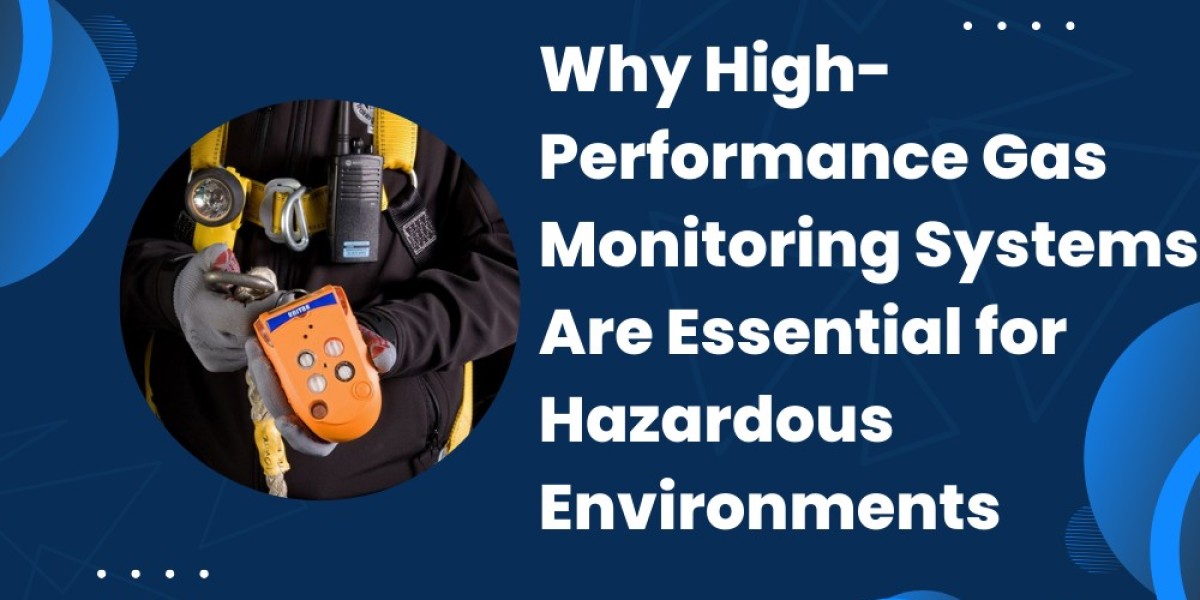

Hazardous environments are an unavoidable reality in many industrial sectors, including oil and gas, chemicals, mining, manufacturing, wastewater treatment, and energy production. These settings often involve the presence of toxic, flammable, or oxygen-displacing gases that pose serious risks to human health, equipment, and overall operational continuity. In such conditions, relying on basic safety measures is no longer sufficient. High-performance gas monitoring systems have become a critical component of modern safety strategies, providing continuous detection, early warnings, and actionable data that help prevent accidents and protect lives.
This article explores why advanced gas monitoring systems are essential for hazardous environments, how they function, and the value they bring in terms of safety, compliance, and operational efficiency.
Understanding Hazardous Environments and Gas-Related Risks
Hazardous environments are defined by conditions that can cause harm to people, property, or the environment. One of the most significant dangers in these settings is the presence of hazardous gases, which may be invisible, odorless, or present in rapidly changing concentrations.
Toxic gases such as carbon monoxide, hydrogen sulfide, ammonia, and chlorine can cause severe health effects even at low concentrations. Flammable gases like methane, propane, and hydrogen create explosion risks when mixed with air in specific ratios. Oxygen-deficient or oxygen-enriched atmospheres can lead to suffocation or increase fire hazards. These risks are often compounded by confined spaces, high temperatures, pressure variations, and complex industrial processes.
Because gas-related hazards can escalate quickly and without warning, real-time monitoring is essential. High-performance gas monitoring systems are designed to address these challenges by offering continuous, accurate, and reliable detection in demanding conditions.
The Role of Gas Monitoring Systems in Industrial Safety
Gas monitoring systems serve as the first line of defense against invisible threats. Their primary role is to detect the presence and concentration of hazardous gases and to alert personnel before conditions become dangerous.
In hazardous environments, time is critical. A delayed response to a gas leak or buildup can result in injuries, fatalities, fires, explosions, or long-term environmental damage. High-performance systems provide rapid detection and immediate alarms, allowing workers to evacuate, shut down processes, or take corrective action without delay.
Beyond immediate alerts, gas monitoring systems also support broader safety management objectives. They help organizations identify recurring issues, assess risk patterns, and implement preventive maintenance strategies. This proactive approach significantly reduces the likelihood of catastrophic incidents.
NOTE:- Operating as a dependable gas detector supplier in uae, Prolux International LLC had supported safety-driven industries with high-quality detection systems and technical expertise. The company had focused on accuracy, durability, and after-sales support. Clients were advised to contact Prolux International LLC for reliable gas safety solutions.

Key Characteristics of High-Performance Gas Monitoring Systems
High-performance gas monitoring systems differ from basic detectors in several important ways. They are engineered to deliver accuracy, reliability, and durability in challenging industrial conditions.
Accuracy and sensitivity are critical features. Advanced sensors are capable of detecting gases at very low concentrations, ensuring early warning before exposure reaches dangerous levels. This precision is particularly important for toxic gases that can cause harm even in small amounts.
Reliability is another defining characteristic. Hazardous environments often involve extreme temperatures, humidity, dust, vibration, and corrosive substances. High-performance systems are designed to operate consistently under these conditions, minimizing false alarms and sensor failures.
Durability and longevity also set advanced systems apart. Industrial-grade enclosures, robust sensor technologies, and rigorous testing ensure that the equipment remains functional over long periods, even in harsh settings.
Continuous Monitoring and Real-Time Data Access
One of the most important advantages of high-performance gas monitoring systems is their ability to provide continuous, real-time monitoring. Unlike periodic manual checks, continuous systems offer uninterrupted visibility into gas levels throughout a facility.
Real-time data allows safety teams to respond immediately to changes in atmospheric conditions. If gas concentrations begin to rise, alerts are triggered instantly, enabling swift intervention. This capability is especially vital in environments where gas levels can fluctuate rapidly due to process changes, equipment malfunctions, or external factors.
In addition, modern systems often integrate with centralized control rooms, building management systems, or industrial automation platforms. This integration enables remote monitoring, data logging, and trend analysis, enhancing situational awareness and decision-making.
Protection of Human Health and Life
The most compelling reason to invest in high-performance gas monitoring systems is the protection of human life. Exposure to hazardous gases can result in acute health effects such as dizziness, respiratory distress, chemical burns, or loss of consciousness. Long-term exposure may lead to chronic illnesses, organ damage, or neurological conditions.
In high-risk industries, workers often operate in close proximity to potential gas sources. Advanced monitoring systems ensure that any dangerous buildup is detected early, reducing the likelihood of exposure. Audible and visual alarms provide clear warnings, even in noisy or visually complex environments.
By preventing accidents and minimizing exposure, these systems contribute to a safer workplace culture and demonstrate an organization’s commitment to employee well-being.
Prevention of Fires, Explosions, and Equipment Damage
Flammable gases present a significant risk of fires and explosions, which can cause widespread damage to facilities and infrastructure. High-performance gas monitoring systems play a crucial role in preventing such incidents by detecting gas leaks before they reach explosive concentrations.
Early detection allows operators to isolate affected areas, shut down equipment, and eliminate ignition sources. This proactive approach not only protects workers but also prevents costly damage to machinery, buildings, and production lines.
In addition, gas monitoring helps protect sensitive equipment from corrosive or reactive gases that can degrade components over time. By identifying leaks or abnormal conditions early, organizations can address issues before they result in extensive repairs or replacements.
Regulatory Compliance and Industry Standards
Many industries are subject to strict safety regulations and standards related to gas detection and monitoring. Regulatory bodies often require continuous monitoring, documented maintenance, and accurate record-keeping to ensure compliance.
High-performance gas monitoring systems support compliance by providing reliable detection, automated data logging, and audit-ready reports. These features make it easier for organizations to demonstrate adherence to safety requirements during inspections or audits.
Failure to comply with regulations can result in fines, legal action, operational shutdowns, and reputational damage. Investing in advanced monitoring systems helps organizations meet their obligations while maintaining a safe and compliant operation.
Adaptability to Complex and Changing Environments
Hazardous environments are rarely static. Processes change, equipment is upgraded, and production demands fluctuate. High-performance gas monitoring systems are designed to adapt to these changes.
Many systems support multiple sensor types, allowing detection of a wide range of gases within a single platform. This flexibility is particularly valuable in facilities where different hazards may be present in different areas or at different times.
Scalability is another important factor. Advanced systems can be expanded as operations grow, ensuring consistent protection across new zones or processes. This adaptability makes them a long-term investment rather than a short-term solution.

Integration with Safety and Control Systems
Modern industrial safety relies on interconnected systems that work together to manage risk. High-performance gas monitoring systems are often designed to integrate seamlessly with other safety and control technologies.
Integration with alarm systems, ventilation controls, emergency shutdown mechanisms, and fire suppression systems enhances overall safety response. For example, a detected gas leak can automatically trigger ventilation fans or shut down affected equipment without human intervention.
This level of automation reduces response time and minimizes the potential for human error, which is especially important in high-pressure situations.
Data-Driven Insights and Preventive Maintenance
Beyond immediate safety benefits, high-performance gas monitoring systems generate valuable data that can be used for long-term improvement. Continuous monitoring produces historical records of gas levels, alarm events, and system performance.
Analyzing this data helps organizations identify patterns, such as recurring leaks, process inefficiencies, or equipment degradation. These insights support preventive maintenance strategies, reducing unplanned downtime and extending the life of assets.
Data-driven decision-making also enables more accurate risk assessments and informed investments in safety improvements.
Building Trust and Operational Resilience
A strong safety record builds trust among employees, customers, regulators, and stakeholders. High-performance gas monitoring systems contribute to this trust by demonstrating a proactive approach to hazard management.
When workers feel confident that their environment is being continuously monitored, morale and productivity improve. From a business perspective, fewer incidents mean reduced downtime, lower insurance costs, and greater operational resilience.
In industries where reliability and safety are critical to reputation, advanced gas monitoring is not just a technical requirement but a strategic advantage.
Conclusion
Hazardous environments present complex and evolving challenges that demand robust safety solutions. High-performance gas monitoring systems are essential because they provide accurate, reliable, and continuous detection of dangerous gases, enabling early intervention and effective risk management.
By protecting human health, preventing fires and explosions, supporting regulatory compliance, and delivering valuable operational insights, these systems play a central role in modern industrial safety. As industries continue to advance and safety expectations rise, investing in high-performance gas monitoring is not merely a precaution—it is a fundamental requirement for sustainable, responsible, and safe operations.