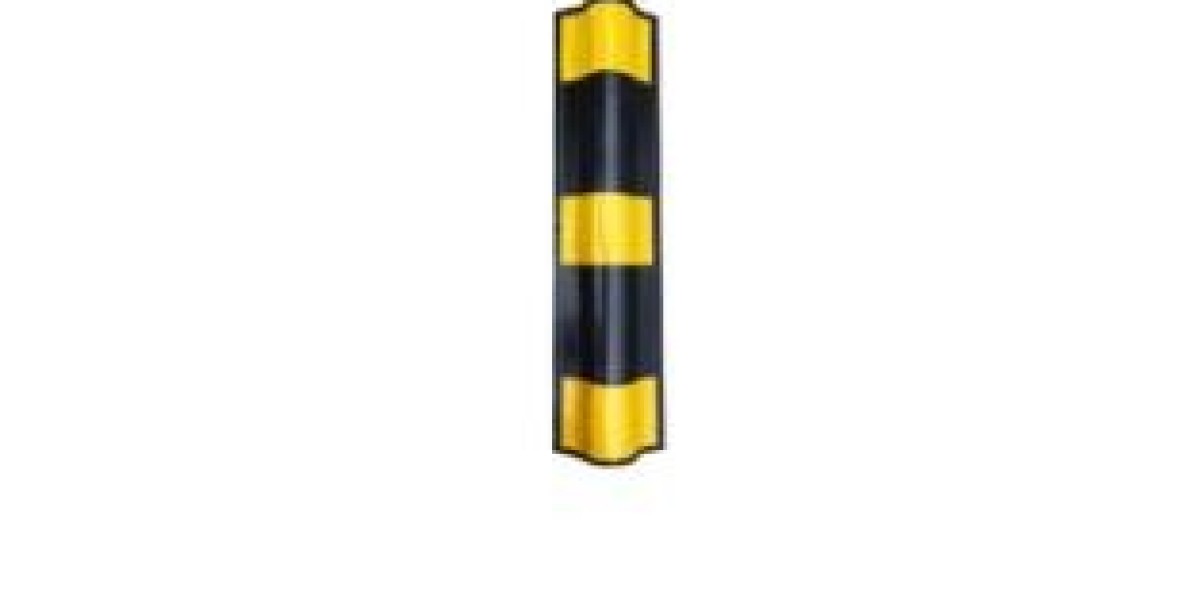

A Corner Guard is commonly installed in parking garages, residential communities, factory workshops, and loading zones where vehicles move in a limited space. Wall corners, pillars, and rear parking walls are frequent contact points during turning or reversing. Adding a Corner Guard helps reduce direct impact between vehicles and fixed structures while guiding drivers through visual cues.
Material selection is often the early concern for buyers. Rubber-based Corner Guard products are widely used because the material is soft enough to absorb contact yet strong enough to hold shape after repeated compression. Compared with metal or rigid plastic alternatives, recycled rubber options are easier on vehicle surfaces and reduce damage to walls and columns. This balance makes them suitable for both commercial and residential parking environments.
Visibility plays a key role in daily use. Many designs combine black rubber with bright yellow reflective tapes, making corners noticeable during daytime and under artificial lighting. At night or in underground garages, reflective elements draw attention to turning points and tight angles. This visual contrast helps drivers adjust speed and direction earlier, especially in areas with frequent traffic flow.
Installation efficiency is another topic buyers often consider. A Corner Guard is typically mounted at a fixed height, commonly around 20 cm from the ground, aligning with bumper contact zones. Installation only requires basic tools such as an impact drill and expansion screws. This simple process allows contractors to complete installations quickly across large parking facilities without complex preparation.
Application range across sites
A single Corner Guard design can be used in parking lots, toll lanes, workshops, gas stations, and home garages. Buyers managing multiple site types often prefer standardized products to simplify inventory and maintenance.
Resistance and durability
Rubber corner guards offer stable resistance to compression and daily contact. They maintain flexibility while handling repeated low-speed impacts from vehicles, carts, or forklifts commonly found in industrial areas.
Wall and vehicle protection balance
By cushioning contact points, a Corner Guard reduces surface wear on walls while lowering the chance of dents or scratches on vehicles. This dual function supports cleaner facilities and fewer repair requests.
Supply consistency for bulk projects
Large parking developments and infrastructure projects require uniform dimensions and material quality. Experienced Corner Guard Manufacturers with steady production output help buyers maintain consistent installation results across different locations.
From a sourcing perspective, working with established Corner Guard Manufacturers offers advantages beyond product availability. Manufacturers with OEM experience can adjust sizes, reflective layouts, or mounting hole patterns based on drawings or samples. This flexibility supports project-specific requirements without changing core installation methods.