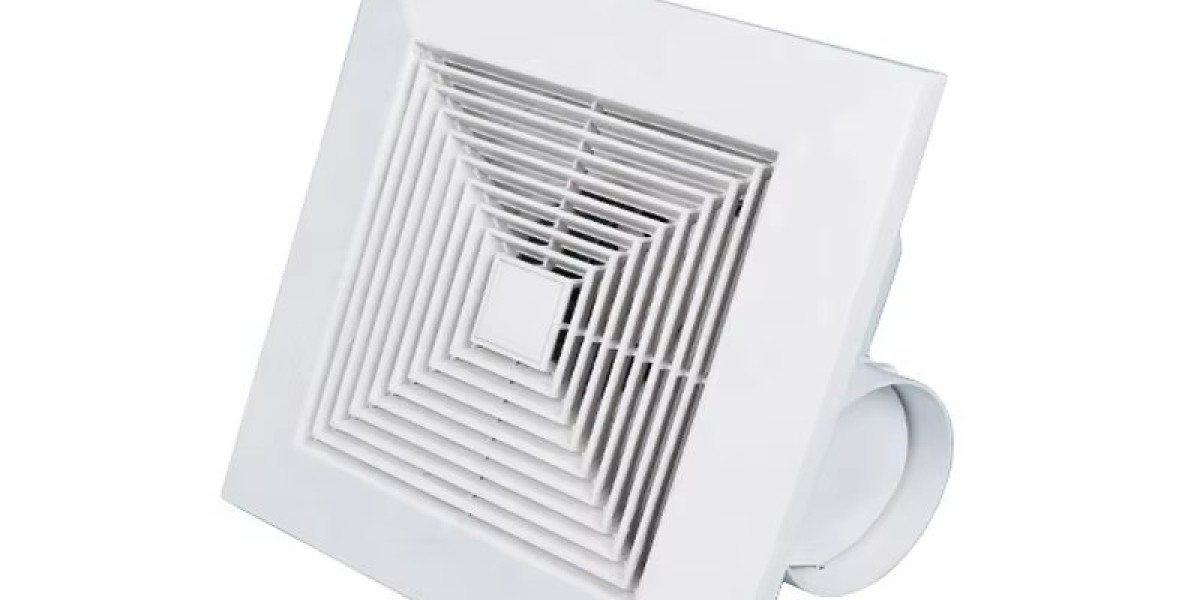

Estimating Airflow Rate for Exhaust Fans Selection for Large Factories rests on three key principles: factory space volume, emission of pollutants, and required number of air changes. First, compute the factory space volume by multiplying the factory length, width and height. Multiply this value of space volume by required number of air exchanges per hour to derive the initial airflow rate. Next, instantaneously increase airflow rate by 20 to 50 percent if the factory is a major source of heat and pollutants (like smelting plants, chemical factories, and welding workshops) to facilitate discharge of heat and pollutants quickly. Finally, estimate inadequate airflow due to long ducts, bends, and filters, and increase the designed airflow rate by 10 to 15 percent to compensate. These principles allow Kanas technical staff to perform the calculations with high accuracy to meet the actual technical parameters required for the chosen smoke ventilator.
Factory Scenarios with Standard Airflow Capacity
For mature scenario processes and large scale factories, Kanas provides standard exhaust fan airflow capacity options in order to facilitate selection efficiencies. In general manufacturing factories such as machinery processing, electronics assembly and with space volumes of 5,000-10,000 cubic meters, exhaust fans with airflow capacity of 10,000-20,000 CFM are suggested, corresponding to an air exchange rate of 6-10 times per hour required to keep air fresh. In high-heat factories such as plastic molding, and metal casting with space volumes of 10,000-20,000 cubic meters, exhaust fans with airflow capacity of 20,000-40,000 CFM are appropriate, obtaining an air exchange rate of 10-15 times per hour needed to rapidly remove waste heat. In pollutant emitting factories such as in chemical processing, welding workshops with space volumes of 3,000-8,000 cubic meters, exhaust fans with airflow capacity of 15,000-30,000 CFM are optimal, ensuring harmful gases, formaldehyde, welding fumes and others are removed within a safe time.
Tailored Exhaust Fan Airflow Capacity for Special Large Factory Applications
Multi-story workshops, factories with unusual layouts, and cleanrooms are examples of special large factories that require tailored temporary exhaust fans air flow capacity solutions because of the special ventilation characteristics. For large multi-story factories, Kanas employs a design of "zone specific ventilation", where different stream capacity exhaust fans are configured on each floor based on heat and pollutant concentration level distribution, where higher stream capacity are allocated on lower floors with congested equipment and upper floors are allocated lower stream capacity fans. For factories with unusual layouts, such as curved workshops and multiple partitions, the company uses CFD (Computational Fluid Dynamics) simulation to find ventilation dead zones, tailoring exhaust fans to specific target stream capacity (30,000 CFM to 50,000 CFM) to achieve balanced ventilation. For large cleanrooms, like those that serve the pharmaceutical and semiconductors industries, Kanas provides low noise, clean, precise stream capacity (5,000 CFM to 15,000 CFM) exhaust fans to match the required air cleanliness level, stabilizing pressure within the airflow.
Energy Efficient Matching of Fan Configuration and Airflow Capacity
The ventilation equipment, therefore, must meet the required energy and performance parameters. In the case of Kanas exhaust fans, implementation of the energy efficiency ratio of the high efficiency motors (>1 level national standard) and optimized design of the impellers make it possible to achieve designed airflow parameters with minimum energy consumption. In the case of high airflow capacity (more than 30,000 CFM) large area production facilities, Kanas recommends a multi-fan parallel configuration, rather than a single large fan. This not only saves energy by 20-30%, but also boosts overall system reliability, as one fan failure will not compromise overall ventilation. In addition, for VFD (Variable Frequency Drive) exhaust fans, with airflow capacity of a 15.000 CFM, real-time (e.g, reduced speed) airflow ventilation needs are balanced to achieve additional savings, particularly for low production periods.
Real World Scenarios Demonstrating Efficient Fume Extraction
In large industries, there is no shortage of events that confirm the Kanas fume extraction with an appropriate volume of airflow. A 15,000 m2 plastic injection moulding factory, for example, used Kanas' 30,000 CFM fume extractor fans. After installation, the factory had an air exchange rate of 12 times per hour, the temperature was decreased by 5℃, the concentration of the plastic fumes were decreased by 70%, and the factory was compliant with the environmental standards of the country. A further example is that of a 20,000 m2 multi-story factory for machinery assembly, which used Kanas' zone-specific exhaust fans with airflow rates of 12,000 to 25,000 CFM. These fans removed the ventilation dead zones, and the air in the building was of a far better quality. Overall, the energy consumption was reduced by 28% as opposed to the previous continuous airflow system. Case studies such as these provide ample evidence that Kanas exhaust fans incorporate features of scientifically validated airflow to provide positive ventilation for large factories and thereby offer a much-needed and healthier active workplace.