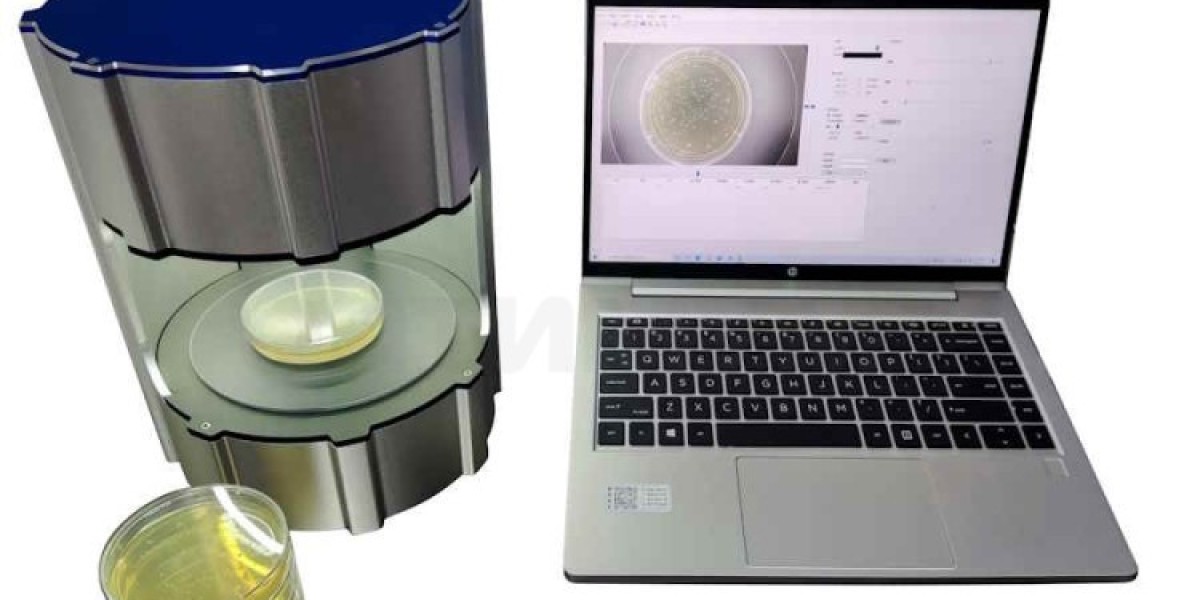

An automated colony counter is a modern laboratory instrument designed to automatically detect and count microbial colonies on agar plates. In microbiology laboratories, accurate colony counting is essential for determining microbial load, validating experiments, and maintaining quality standards. Manual colony counting is often slow, labor-intensive, and prone to human error, especially when dealing with a large number of samples. Automated colony counters solve these problems by using advanced imaging and software technology to deliver fast, precise, and reproducible results.
What Is an Automated Colony Counter?
An automated colony counter is a digital system that uses high-resolution cameras and image-processing algorithms to identify and count colonies on culture plates. Unlike manual or semi-automatic methods, automated systems analyze the entire plate in seconds and provide consistent results regardless of colony density. These devices are widely used in microbiology, pharmaceuticals, food safety testing, and research laboratories where speed and accuracy are critical.
How an Automated Colony Counter Works
Image Capture and Processing
Automated colony counters capture clear images of agar plates using built-in cameras and controlled lighting. The software then processes these images to distinguish colonies from the background. Advanced algorithms identify colony size, shape, and contrast to ensure accurate detection, even when colonies are closely spaced.
Automatic Counting and Analysis
Once the image is processed, the system automatically counts the colonies and displays the results on a digital interface. Many automated colony counters also provide additional analysis, such as colony size distribution and color differentiation. This level of automation significantly reduces manual workload and minimizes counting inconsistencies.
Key Features of Automated Colony Counters
High Accuracy and Reproducibility
One of the biggest advantages of an automated colony counter is its ability to deliver highly accurate and reproducible results. Because counting is performed by software rather than the human eye, variations caused by fatigue or subjective judgment are eliminated. This makes automated colony counters ideal for laboratories that require strict quality control.
Time-Saving Performance
Automated colony counters dramatically reduce the time required for colony counting. What may take several minutes manually can be completed in just a few seconds. This increased efficiency allows laboratory staff to focus on data analysis and other critical tasks, improving overall productivity.
User-Friendly Interface
Modern automated colony counters are designed with intuitive software interfaces that are easy to operate. Minimal training is required, making them suitable for both experienced microbiologists and new laboratory technicians. Touchscreen controls and clear result displays further enhance usability.
Data Storage and Reporting
Automated colony counters often include built-in data storage and reporting features. Results can be saved digitally, exported to computers, or integrated into laboratory information management systems (LIMS). This ensures proper documentation, traceability, and compliance with regulatory requirements.
Applications of Automated Colony Counters
Automated colony counters are used across a wide range of industries. In microbiology laboratories, they help researchers accurately quantify bacterial and fungal growth. In the pharmaceutical industry, automated colony counting is essential for sterility testing and microbial limit testing. Food and beverage laboratories rely on automated colony counters to ensure product safety and hygiene. Environmental testing laboratories also use these systems to analyze water, soil, and air samples for microbial contamination.
Advantages Over Manual Colony Counting
Manual colony counting is not only time-consuming but also increases the risk of errors, especially when colony numbers are high. Automated colony counters eliminate these challenges by providing fast, objective, and repeatable results. They also reduce operator fatigue and improve laboratory workflow, making them a cost-effective long-term solution for high-volume testing environments.
Choosing the Right Automated Colony Counter
When selecting an automated colony counter, laboratories should consider factors such as plate size compatibility, counting accuracy, software features, and ease of use. A reliable system should be able to handle different types of media and colony morphologies while maintaining consistent performance. Investing in the right automated colony counter can significantly improve laboratory efficiency and data reliability.
Conclusion
An automated colony counter is an essential tool for modern laboratories seeking accuracy, speed, and efficiency in microbial analysis. By eliminating manual errors and reducing processing time, automated colony counters enhance productivity and ensure reliable results. Whether used in research, pharmaceuticals, food safety, or environmental testing, an automated colony counter is a valuable investment for any laboratory focused on precision and quality.