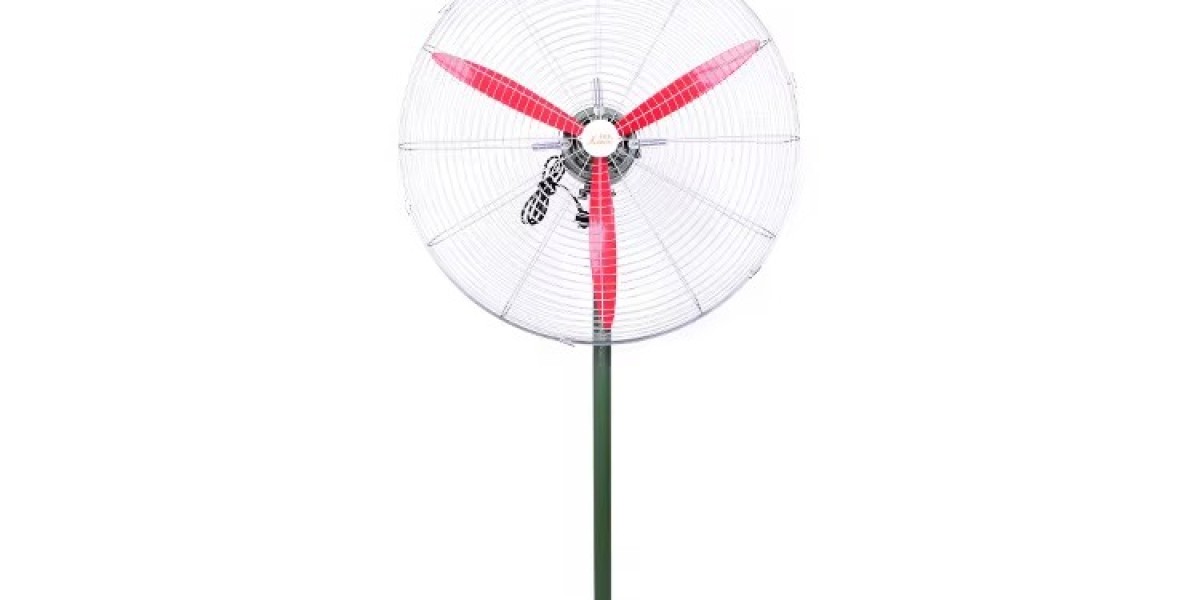

With time and use, dust, debris, and industrial particles can build up on the fan blades, casings, and motors of industrial fans. This build up can affect the efficiency of the airflow and even cause premature wear. KANASI recommends industrial fans in general environments to be cleaned once a month, while fans in dusty or harsh environments should be cleaned once a week. To clean the blades and surfaces of a fan, use a soft brush, a damp washcloth, or some compressed air. When cleaning, do not use harsh chemicals that could damage the anti-corrosive coatings. For KANASI's explosion-proof or corrosion-resistant industrial fans, cleaning should be done in accordance with the directive that helps maintain sealed components and protective finishes. Cleaning the industrial fan regularly helps to ensure that it has optimal airflow, and helps to reduce the load on the motor, preventing it from overheating.
Motor Lubrication And Inspection
The motor is the heart of an industrial fan and its maintenance is of utmost importance. If you have a KANASI fan, try to schedule a motor inspection every 3 to 6 months to check for loose wires, signs of wear, overheating, and any abnormal behaviors. Make sure to inspect the wires and terminals for any signs of corrosion or damage. Oil industrial fans have oil-filled motors and require lubricant changes every 6 to 12 months. Make sure to change those oil levels to the correct grade that is located in the KANASI manual. If you have a KANASI industry fan that has a brushless DC motor or a maintenance-free motor, those require a visual inspection every so often, even though they don't require a lot of lubrication. Proper maintenance is the key to longevity and enduring motor breakdowns, and it ensures that the cooling fan can produce the necessary industrial fan powerful output consistently.
Regular fan blade maintenance helps maintain the performance of the fan.
The fan blades are important for the performance of the fan. Inspect KANASI fan blades every three months for cracks, chips, or deformation, especially within the rough or high-traffic areas. To keep fan blades forever, right fixtures, and check them often to keep them from becoming damaged due to continued unwanted shaking, which can then lead to uneven. If blades are dirty and have on them, using and stain a strong detergent should always be used, but make sure to be that your blades are balanced. KANASI fan blades can be made on a alloy of high strength and fan a of materials blades, and stainless steel and aluminum, but don't scrimp on the other stuff. So try to rest from straining correlated to the inefficient and motor repetitive activities.
Safety Component Checks Mitigate Operational Risks
Industrial fan maintenance always prioritizes the safety of the workers in hazardous settings. As per KANASI regulation, safety components, including anti fall devices, safety guards, and explosion proof enclosures, must be checked every 6 months. Confirm that fan safety guards are intact and that they are mounted steadily to block accidental contact with the fan’s rotating components. Also, check the sealed components and the flameproof enclosures of the explosion proof industrial fans that are undamaged. This is critical to ensure compliance with the ATEX certification. Regular maintenance is required to ensure the protection from overload and the monitoring the temperature function is working properly in case of an abnormality. Industrial fans keep their safety internationally and service safety properly maintain the industrial accident averted.
Testing and Calibration Keeps Efficiency High
Identifying issues before they become a problem is a key benefit of regular performance testing. KANASI recommends testing industrial fans and measuring airflow, speed, and noise every six months to a year with professional equipment or KANASI’s smart monitoring systems (available on select models). Evaluating performance against original specs can show declining performance and can indicate issues such as motor wear or blade imbalance. Adjust speed controllers and smart features to reflect current settings. For high critical applications, KANASI provides professional testing to guarantee that your industrial fans are functioning optimally. However you look at it, testing and calibrating ensures that KANASI fans operate at peak efficiency and minimizes the risk of unplanned downtime.
Professional Services for Complex Maintenance Requirements
As much as we would love to handle all the maintenance for our fans as DIY tasks, there are certain technical intricacies that are best left to the professionals. Because large-scale or specialized models (i.e. explosion proof, corrosion resistant) fans are more complex, we recommend that you schedule annual professional servicing. KANASI’s after-sales service support has a rigid schedule, which means he visits our customers’ facilities about once a year, depending on the fans’ warranty status. During these visits, he performs inspections, motor repairs, and replaces (or even upgrades!) various components (using KANASI’s genuine parts, of course). For KANASI fans that are out of warranty, flexible maintenance packages are available to optimize the cost of our customer’s maintenance plans. In addition to identifying and fixing any technical problems, professional servicing helps customers to meet the international safety standards. Prolonging the time between maintenance visits is a significant concern for KANASI fans and their service as it only delays the servicing. KANASI is very serious about providing after-sales support, and we do everything we can to deliver that promise.