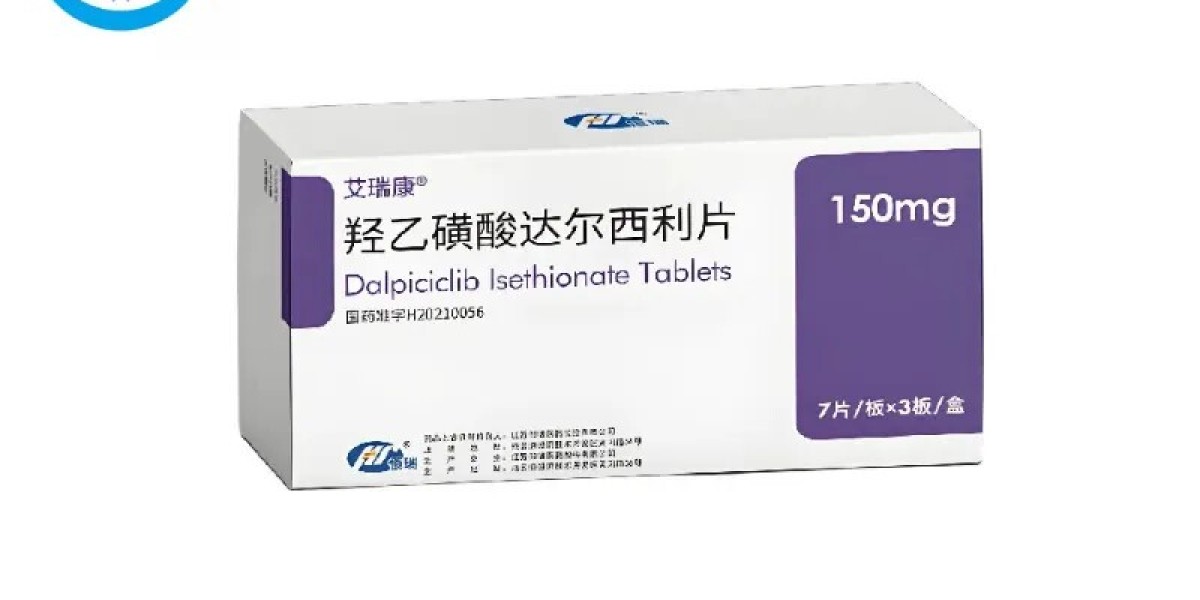

Among female malignant tumors, breast cancer consistently ranks first in incidence, with hormone receptor (HR)-positive, human epidermal growth factor receptor 2 (HER2)-negative breast cancer accounting for about 70%. Treatment for these patients primarily relies on endocrine therapy, but advanced patients are prone to developing resistance, leading to treatment bottlenecks. The emergence of Dalpiciclib (trade name: Airuikang®) has broken this impasse—as China's first independently developed novel highly selective CDK4/6 inhibitor, it offers new treatment options for HR-positive/HER2-negative breast cancer patients through its precise targeting mechanism, excellent safety profile, and clinical data tailored to Chinese patients, reshaping the treatment landscape for this type of breast cancer. DengyuePharma will analyze it from aspects including drug overview, mechanism of action, indications, and safety.
Drug Overview: Domestically Developed Original Drug, Precise Targeted Anti-Tumor New Drug
Dalpiciclib is an oral, selective small-molecule anti-tumor drug independently developed by Hengrui Medicine. It is classified as a Class B prescription drug under medical insurance, in the form of white film-coated tablets that appear off-white to pale yellow after removing the coating. The main active ingredient is dalpiciclib isethionate, with excipients including mannitol and pregelatinized starch. It is available in three specifications: 50mg, 125mg, and 150mg, facilitating clinical dose adjustments based on patient conditions. Unlike similar imported CDK4/6 inhibitors, Dalpiciclib's development focused entirely on the characteristics of breast cancer in Chinese patients, with 100% of its clinical data derived from Chinese populations, where 58.9% had visceral metastases and 44% were premenopausal, more closely aligning with real-world clinical scenarios in China and providing more targeted evidence-based support for Chinese patients' treatment.
Since its approval for marketing by the National Medical Products Administration on December 31, 2021, the drug has continuously expanded its indications. As of May 2025, its marketing application for adjuvant treatment of HR-positive breast cancer has been accepted by the National Medical Products Administration, further broadening the beneficiary patient population. It should be stored sealed at no more than 25°C, with a shelf life of 36 months. Patients must use it under medical guidance and avoid self-medication or dose changes.
Mechanism of Action: Precisely Blocking the Cell Cycle, Inhibiting Tumor Proliferation
The abnormal proliferation of breast cancer cells is closely related to dysregulation of cell cycle control, where CDK4 (cyclin-dependent kinase 4) and CDK6 (cyclin-dependent kinase 6) are key kinases regulating the transition from G1 to S phase in the cell cycle. They are overactivated in HR-positive breast cancer cells, leading to uncontrolled proliferation and spread of tumor cells. More than half of breast cancer patients overexpress cyclin D, which directly acts on CDK4/6, making CDK4/6 an important molecular target for HR-positive breast cancer patients.
Dalpiciclib highly selectively inhibits CDK4/6 kinase activity, preventing their complex formation with cyclin D, thereby inhibiting downstream phosphorylation of retinoblastoma protein (Rb). This arrests tumor cells in the G1 phase, preventing entry into the S phase for DNA replication, ultimately achieving anti-tumor effects by inhibiting tumor cell proliferation and inducing tumor cell stasis. Notably, through molecular structure optimization, Dalpiciclib incorporates a piperidine structure, eliminating the risk of glutathione trapping and fundamentally reducing potential liver toxicity, which is one of its key advantages over similar CDK4/6 inhibitors.
Indications: Covering Advanced and Adjuvant Therapy, Benefiting More Patients
Based on two confirmatory Phase III clinical studies (DAWNA-1 and DAWNA-2), Dalpiciclib has been approved in China for two core indications, primarily for patients with HR-positive, HER2-negative locally advanced or metastatic breast cancer: first, in combination with aromatase inhibitors as initial endocrine therapy; second, in combination with fulvestrant for patients who have progressed after prior endocrine therapy.
Additionally, the ongoing DAWNA-A study (a multicenter, randomized, double-blind Phase III clinical trial) shows that Dalpiciclib combined with endocrine therapy for adjuvant treatment of HR-positive/HER2-negative early or locally advanced breast cancer can significantly reduce recurrence risk and improve invasive disease-free survival (iDFS). The marketing application for this indication has been accepted, and it will provide new options for postoperative adjuvant therapy in early breast cancer patients, helping to reduce recurrence rates and improve cure rates.
It should be noted that premenopausal/perimenopausal women receiving Dalpiciclib combined with endocrine therapy should concurrently receive gonadotropin-releasing hormone agonist treatment according to current clinical practice standards to ensure therapeutic efficacy.
Safety and Adverse Reaction Management
Compared to similar CDK4/6 inhibitors, Dalpiciclib has a superior safety profile, with adverse reactions that are more manageable, suitable for long-term use, and particularly aligned with the physical characteristics of Chinese patients. Its adverse reactions are mainly concentrated in the hematological system and are mostly reversible, with overall milder non-hematological adverse reactions and good patient tolerability.
Hematological adverse reactions are the most common, with neutrophil count decrease occurring in 98.5% of patients, 85.8% being grade 3 or higher, but no febrile neutropenia was observed in clinical trials. This adverse reaction is reversible—unlike chemotherapy, CDK4/6 inhibitors cause bone marrow suppression by arresting the cell cycle without inducing apoptosis, allowing rapid recovery of bone marrow cell proliferation after discontinuation, without significantly affecting patients' quality of life. Additionally, leukocyte count decrease (97.9%), anemia (64.9%), and platelet count decrease (53.8%) are common, but the proportion of ≥ grade 3 is significantly lower than for neutropenia, and can be effectively managed through regular monitoring and dose adjustments.
Among non-hematological adverse reactions, rash (24.1%), nausea (17.3%), musculoskeletal pain (17.2%), fatigue (13.9%), oral mucositis (13.5%), and elevated blood creatinine (12.0%) are more common, but mostly grade 1-2. Notably, no grade 3/4 diarrhea was observed with Dalpiciclib, with gastrointestinal adverse reactions occurring in less than 5%, requiring no prophylactic antidiarrheal; simultaneously, cardiac toxicity risk is extremely low, with QTc prolongation and venous thrombosis rates both under 1%, making it suitable for patients at high cardiovascular risk, which is one of its core advantages over similar drugs.
Adverse reaction management must follow standards: complete blood count should be checked weekly in the first 12 months of treatment, then monthly once stable; baseline and monthly liver function monitoring is required, with drug discontinuation and hepatoprotective treatment for grade 3 or higher liver enzyme elevation, followed by dose reduction upon recovery. For grade 3 neutropenia, immediately suspend the drug and provide G-CSF support, resuming at original or reduced dose after recovery to ≤ grade 2; for grade 4 or febrile neutropenia, discontinue until ≤ grade 2, then mandate dose reduction, terminating treatment if necessary. Mild reactions like rash and fatigue can be alleviated with topical medications, nutritional support, etc., without discontinuation.
The drug is contraindicated in those with known hypersensitivity to dalpiciclib or any of its components; patients must inform doctors of their allergy history, medical history, and other medications before use to avoid drug interactions.
Clinical Value and Industry Significance
In terms of clinical efficacy, Dalpiciclib performs exceptionally: clinical data show that combined with fulvestrant for HR-positive/HER2-negative metastatic breast cancer patients who progressed after prior endocrine therapy, it extends median progression-free survival to 15.7 months, reduces disease progression risk by 58%, and increases objective response rate to 27%, with clinical benefit rates significantly superior to endocrine therapy alone, securing longer survival and better quality of life for advanced patients. In the adjuvant therapy field, positive results from the DAWNA-A study are expected to help more early breast cancer patients avoid recurrence and achieve clinical cure goals.
In industry terms, Dalpiciclib's launch has broken the market monopoly of imported CDK4/6 inhibitors. As a Chinese original drug, it offers price advantages and, after inclusion in the Class B medical insurance catalog, further reduces patients' medication burden, enabling more ordinary families to access precise targeted drugs. Its development process has accumulated clinical data from Chinese populations, filling the gap in localized evidence-based medicine for domestic CDK4/6 inhibitors and providing treatment regimens more suited to national conditions for HR-positive/HER2-negative breast cancer in China, propelling China's breast cancer targeted therapy into the "domestic precision era."
Additionally, with lower liver toxicity, better cardiac safety, and no severe diarrhea, clinical management is less difficult, and with similar CDK4/6 inhibitors already in the medical insurance catalog, clinicians have rich management experience, further enhancing its clinical application convenience and accessibility, allowing it to benefit more breast cancer patients faster.
Summary
Dalpiciclib Tablets, as China's independently developed novel highly selective CDK4/6 inhibitor, has become an important drug for HR-positive/HER2-negative breast cancer treatment with its precise targeting mechanism, excellent efficacy, lower safety risks, and clinical characteristics tailored to Chinese patients. From second-line treatment for advanced patients to adjuvant therapy for early patients, it continuously expands indication boundaries, providing personalized treatment options for breast cancer patients at different stages, not only extending survival but also improving quality of life.
As a model of domestically developed original targeted drugs, Dalpiciclib not only breaks the monopoly of imported drugs and reduces patients' medication burden but also promotes independent innovation in China's breast cancer targeted therapy field. In the future, with ongoing clinical research, this drug is believed to play a greater role in breast cancer treatment, bringing hope to more breast cancer patients and contributing to the goal of "precise anti-cancer, guarding health."