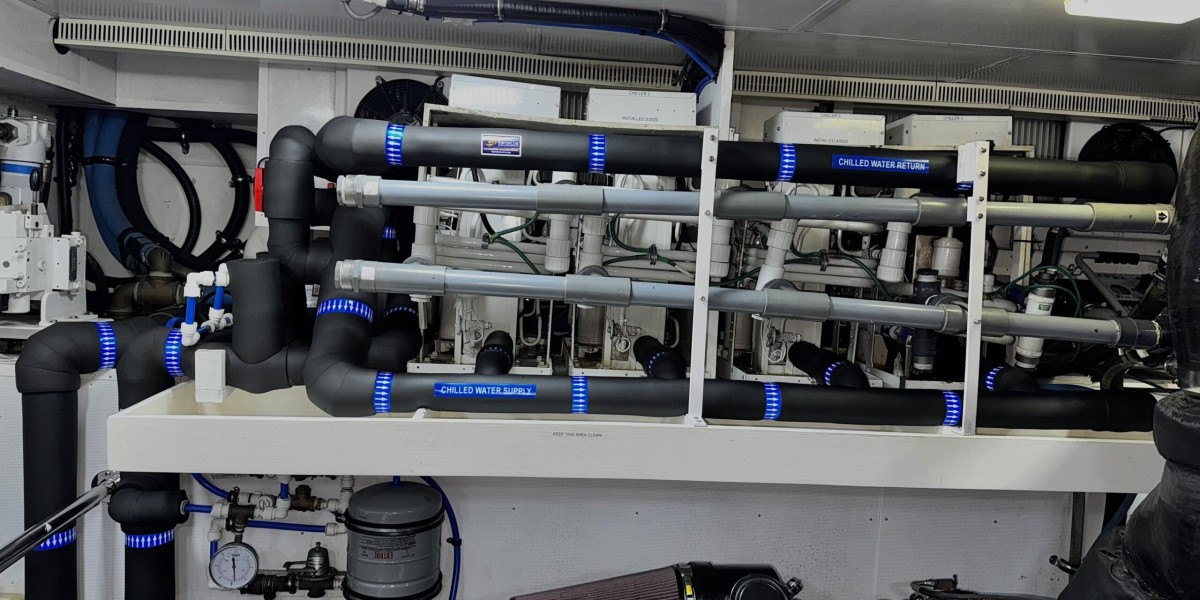

Harsh marine climates present some of the most demanding operating conditions in the industrial world. Extreme temperatures, high humidity, salt-laden air, constant vibration, and limited maintenance access all place severe stress on vessel systems. Marine pipe insulation is a critical defense against these challenges, helping protect equipment, maintain efficiency, and ensure crew safety. Marine insulation companies rely on detailed evaluation criteria before selecting insulation solutions suited for such environments. Within the first stage of project assessment, climate-driven factors shape every insulation decision, ensuring long-term reliability in unforgiving offshore and seagoing conditions.
Environmental Exposure Assessment
The first consideration marine insulation companies evaluate is environmental exposure. Harsh marine climates differ widely, from freezing polar waters to equatorial zones with intense heat and humidity. Each climate creates unique insulation demands.
Marine pipe insulation must perform consistently under salt spray, UV exposure, wind-driven moisture, and rapid temperature changes. Marine insulation companies analyze ambient temperature ranges, humidity levels, and exposure frequency to determine how insulation systems will behave over time. This assessment forms the foundation for material and system selection.
Temperature Extremes and Thermal Stability
Thermal stability is essential in harsh climates where systems experience rapid heating and cooling cycles. Sudden temperature shifts can degrade insulation, loosen fittings, and increase condensation risks.
Marine pipe insulation is selected based on its ability to maintain performance across wide temperature ranges. Marine insulation companies evaluate thermal conductivity, expansion tolerance, and resistance to thermal shock to ensure insulation remains effective in both extreme cold and intense heat.
Moisture Resistance and Water Absorption
Moisture intrusion is one of the most destructive forces in marine environments. Insulation that absorbs water loses thermal efficiency and accelerates corrosion beneath the surface.
Marine insulation companies prioritize low water absorption when selecting marine pipe insulation. Closed-cell structures, integrated vapor barriers, and moisture-resistant jacketing are evaluated to prevent water ingress. In harsh climates, insulation must repel moisture consistently, even after years of exposure.
Saltwater and Corrosion Protection
Saltwater exposure accelerates corrosion on both pipes and insulation fasteners. Marine insulation companies assess how insulation materials and protective coverings respond to saline conditions.
Marine pipe insulation systems often incorporate corrosion-resistant jacketing, sealed joints, and compatible materials to prevent chemical reactions. Selection criteria focus on long-term corrosion mitigation, especially in splash zones, deck piping, and offshore processing areas.
Mechanical Strength and Vibration Resistance
Harsh marine climates often coincide with rough seas, heavy machinery operation, and constant vibration. Insulation systems must withstand physical stress without cracking, compressing, or shifting.
Marine insulation companies evaluate the mechanical strength of marine pipe insulation, including resistance to compression, impact, and vibration-induced fatigue. Secure fastening systems and durable outer layers are selected to ensure insulation integrity under continuous motion.
Fire Resistance and Safety Performance
Safety regulations become even more critical in remote and harsh marine locations where emergency response options are limited. Insulation must contribute to fire containment and surface temperature control.
Marine insulation companies assess fire ratings, flame spread characteristics, and heat resistance of marine pipe insulation materials. Fire-safe insulation systems protect crew members and equipment while ensuring compliance with international maritime safety standards.
Space Constraints and Installation Feasibility
Harsh climates often involve retrofitting older vessels or offshore structures with limited space availability. Insulation selection must consider thickness, flexibility, and installation practicality.
Marine pipe insulation materials are evaluated for performance-to-thickness ratio. Marine insulation companies favor solutions that provide high thermal resistance without occupying excessive space, especially in congested engine rooms or utility corridors.
Longevity and Maintenance Demands
In remote marine environments, frequent maintenance is costly and difficult. Insulation systems must deliver extended service life with minimal intervention.
Marine insulation companies assess expected lifespan, resistance to degradation, and ease of inspection when selecting marine pipe insulation. Durable systems reduce maintenance frequency, support operational continuity, and lower long-term ownership costs.
Compatibility With Vessel Systems
Insulation must integrate seamlessly with piping materials, coatings, and vessel design. Incompatible materials can create galvanic reactions or installation challenges.
Marine insulation companies evaluate chemical compatibility, fastening methods, and interface performance. Marine pipe insulation is selected to function harmoniously with existing systems, ensuring stability in harsh climates.
Energy Efficiency Expectations
Harsh climates often increase energy demand for heating or cooling. Insulation plays a direct role in managing this load.
Marine pipe insulation is evaluated for its ability to reduce heat loss or gain under extreme conditions. Marine insulation companies use thermal modeling and performance data to ensure insulation contributes to fuel efficiency and stable system operation.
Regulatory and Classification Requirements
Operating in severe marine climates often involves stricter regulatory oversight. Insulation systems must meet international codes and classification society standards.
Marine insulation companies verify that marine pipe insulation materials and installation methods align with safety, environmental, and performance regulations. Compliance is a key selection criterion, ensuring uninterrupted operation and inspection readiness.
Adaptability to Climate Variability
Some vessels transition between multiple climate zones during operation. Insulation must perform reliably in all encountered conditions.
Marine insulation companies favor adaptable marine pipe insulation systems that maintain effectiveness across changing temperatures and humidity levels. This flexibility supports global operations without the need for repeated modifications.
Conclusion: Strategic Selection for Extreme Conditions
Selecting insulation for harsh marine climates requires careful evaluation across environmental, mechanical, safety, and operational dimensions. Marine insulation companies apply strict selection criteria to ensure marine pipe insulation withstands extreme exposure, minimizes maintenance demands, and supports vessel efficiency. By prioritizing moisture resistance, thermal stability, corrosion protection, and durability, insulation systems become a long-term safeguard rather than a recurring liability. Proper selection ensures vessels remain safe, efficient, and resilient, even in the world’s most challenging marine environments.