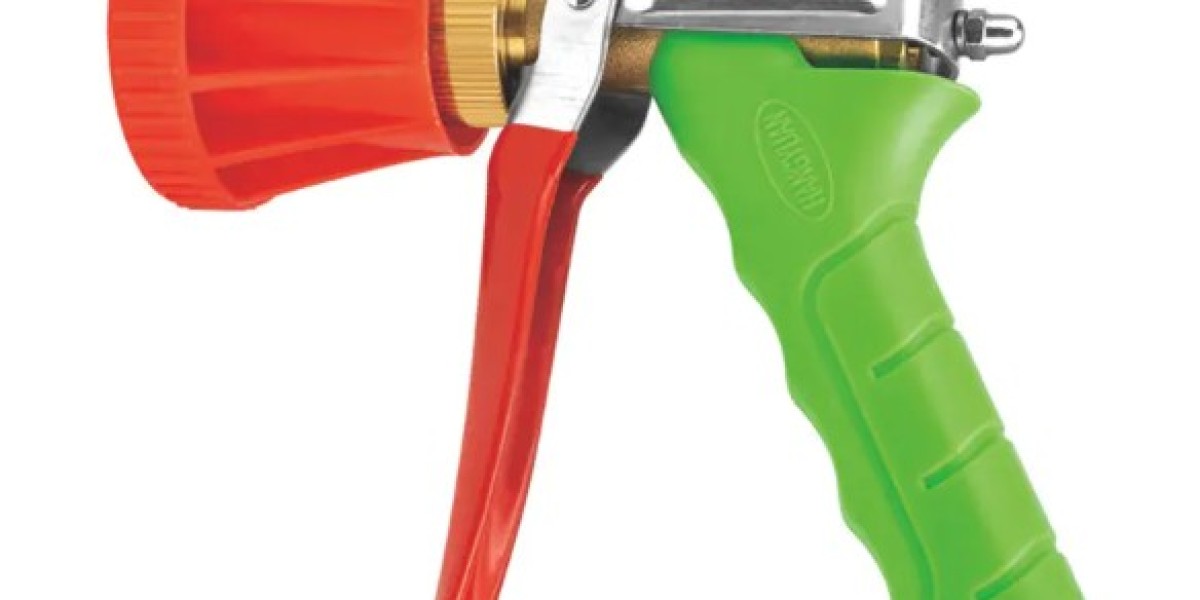

Spraying equipment used in agriculture must respond consistently under changing working conditions. Whether applied for crop treatment, surface cleaning, or sanitation, the Agricultural Spray Gun remains a core tool in routine operations. When combined with a High Pressure Adjustable Chemical Spray Gun structure, it allows operators to manage flow intensity and spray pattern without interrupting work. This combination reflects practical demands rather than laboratory assumptions.
In daily use, spraying tasks often involve varying distances, surface sensitivities, and liquid formulations. Equipment must therefore provide predictable output and stable control across repeated cycles. The way these spray guns are designed and assembled directly affects how they perform once exposed to real field conditions.
Consistency Requirements During Agricultural Spraying
An Agricultural Spray Gun is frequently used for extended periods, making consistency more important than short-term output. Operators expect the spray pattern to remain stable once adjusted, even as tank pressure changes or liquid levels drop. Achieving this requires internal flow paths that support even distribution.
Nozzle components are designed to maintain alignment under vibration and pressure fluctuation. Adjustable spray heads allow changes in dispersion angle, but these adjustments must remain secure once set. Loose or unstable components can disrupt application uniformity, leading to uneven coverage.
Trigger response also influences operational consistency. A smooth and predictable trigger allows the operator to control flow start and stop accurately, reducing overspray and material waste. These functional details are addressed during manufacturing through tolerance control and repeated actuation testing.
Pressure Regulation in Adjustable Chemical Spray Guns
The defining feature of a High Pressure Adjustable Chemical Spray Gun is its ability to regulate output pressure according to task requirements. Adjustable pressure supports a broader range of applications without changing equipment. Lower pressure may be used for delicate plant surfaces, while higher pressure supports cleaning or distant reach.
Pressure regulation systems rely on internal valves that respond gradually rather than abruptly. Sudden pressure changes can disrupt spray consistency and operator control. Manufacturers focus on designing pressure paths that stabilize flow after adjustment.
Sealing performance is critical under adjustable pressure conditions. Gaskets and O-rings must maintain contact integrity across different pressure settings. During production, pressure testing is conducted to observe how seals behave under sustained use rather than momentary peaks.