In the world of heavy lifting, the wire rope is the lifeline of your Manitowoc crane. It's a dynamic component that works under immense stress, and its failure is rarely a random event. Instead, it's typically the culmination of overlooked signs and deferred maintenance. For operators and fleet managers, understanding these signs is not just about equipment care—it's a fundamental safety and operational imperative. Ensuring you have access to genuine quality Manitowoc crane parts is the first step in a robust maintenance strategy, a principle any reputable crane parts supplier will emphasize.
This detailed guide explores the unambiguous indicators that your crane's wire rope requires immediate replacement. We'll move beyond superficial checks to understand what each sign reveals about the rope's internal condition and the risks of continued use.
Interpreting Broken Wire Patterns
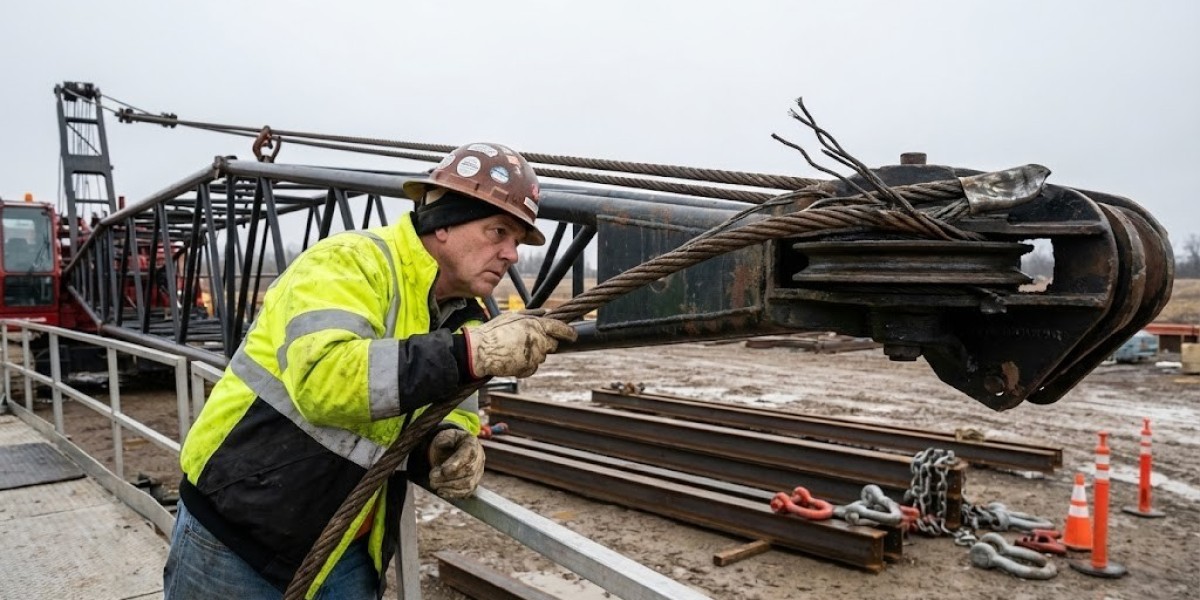
The appearance of broken wires is the most direct communication from your wire rope. Dismissing isolated breaks as "cosmetic" is a common and dangerous mistake. Each broken wire represents a localized failure of the rope's load-sharing structure. When wires begin to fail, it indicates that the rope's elastic limit has been exceeded in that area, often due to fatigue from repeated bending over sheaves or drums.
Clusters of broken wires or patterns that recur in the same rope section (especially near fittings or at points of frequent drum contact) are red flags demanding immediate action. This pattern signals concentrated fatigue and predicts a progressive, rapid decline in the rope's remaining strength. At this stage, consulting your crane parts supplier for a replacement should be your next move, not a future consideration. Procrastination risks a catastrophic failure that could have been prevented with timely replacement using quality Manitowoc crane parts.
Loss of Core Support and Geometric Deformities
A wire rope's strength relies on its precise geometric construction. Any permanent deformation is a serious compromise. Flattened sections often result from external crushing forces, such as rope riding over itself on a poorly spoiling drum or an accidental overload event. This deformation redistributes internal stresses unevenly, overloading some wires while underloading others, which accelerates overall failure.
A kink, however, is a terminal diagnosis. It occurs when the rope is allowed to form a loop that is then pulled tight, permanently displacing the core and distorting the lay of the strands. A kinked rope has suffered irreparable internal damage; its original strength rating is void. There is no repair. Immediate replacement with certified quality Manitowoc crane parts is the only safe recourse. A knowledgeable crane parts supplier can provide not only the correct rope but also advise on proper handling techniques to prevent recurrence.
The Tale Told by Wear: From Polishing to Abrasion
Normal wear presents as a gradual, even polishing of the outer wires. Abnormal, dangerous wear is characterized by a loss of wire diameter. When the once-rounded crowns of the outer wires become flat, a significant cross-sectional area of steel has been worn away. This directly reduces the rope's breaking strength and its resistance to fatigue.
Localized heavy abrasion, often found where the rope contacts a specific sheave or drum flange, points to a misalignment or a component issue. Simply replacing the rope without addressing the worn sheave is a wasted investment, as the new rope will suffer the same fate. This highlights the systems approach of a good crane parts supplier; they understand that replacing quality Manitowoc crane parts like wire rope often requires inspecting and potentially replacing associated quality Manitowoc crane parts like sheaves and drums to ensure a lasting fix.
The Insidious Threat of Corrosion
Corrosion is a thief that steals strength quietly. Surface rust can sometimes be cleaned and monitored, but any pitting is cause for concern. Pitting creates stress concentrators—microscopic notches where cracks can initiate and propagate under cyclic loading.
The greater danger lies in internal corrosion, often hidden within the rope's core. It can be caused by water intrusion or a lack of proper lubrication. Signs include stiffness, a "crackling" sound when the rope is flexed, and the exudation of rusty paste from the interior. Internal corrosion is a definitive failure point. The rope's integrity is no longer calculable, making it unfit for service. In corrosive environments, discussing specialized, corrosion-resistant options with your crane parts supplier is a wise long-term strategy for protecting your investment in quality Manitowoc crane parts.
Measuring the Inevitable: Diameter Reduction
As a wire rope works, its wires wear and adjust, often leading to a gradual reduction in diameter. Manufacturers specify a maximum allowable reduction (often around 5-7% for rotation-resistant ropes). Exceeding this tolerance means the rope has lost too much metallic area to safely carry its rated load.
Diameter loss is rarely uniform. Using calipers to measure at multiple points, especially near end attachments and over sheave contact zones, is crucial. A pronounced "necked-down" section is a severe weak link. Visual confirmation of thinning means the rope is past its retirement point. Sourcing a precise replacement from your crane parts supplier ensures the new quality Manitowoc crane parts match the OEM diameter and construction, guaranteeing proper spooling and sheave fit.
Spooling Tells the Story
A healthy, properly matched rope will spoole evenly and tightly onto the drum. Persistent spoiling issues—such as birdcaging (where the rope springs open), gaps between wraps, or cross-winding—are rarely just an operator error. They are frequently symptoms of a rope that has lost its internal torque balance, become too stiff from corrosion, or is mismatched to the drum's geometry.
Forcing a problematic rope to spoole damages it further and can damage the drum itself. If spoiling problems continue after verifying proper fleet angle and drum condition, the rope itself is likely the culprit. Replacing it with the correct quality Manitowoc crane parts specified for your crane model restores proper system harmony. Your crane parts supplier plays a key role here, providing the exact specifications needed for correct performance.
The Operator's "Feel" and Sensory Cues
An experienced crane operator develops an intuitive sense for their machine. A change in this "feel"—increased stiffness, a jerky motion during payout or retrieval, or unusual noises like scraping or popping from the rope system—is a critical subjective indicator. These sensations often point to internal binding, severe lubrication loss, or advanced strand damage.
Never ignore these sensory warnings. They are the human element of predictive maintenance, signaling that a quantitative inspection is urgently needed. Having a trusted relationship with a crane parts supplier allows you to act quickly on these instincts, securing the necessary quality Manitowoc crane parts before a minor concern becomes a major failure.
The Unforgiving Impact of Heat
Discoloration (blue or brown temper colors) on wire rope is a permanent marker of overheating. This can result from sustained slippage on a dragging brake, a seized sheave bearing creating extreme friction, or a catastrophic event like a lightning strike. Heat alters the steel's microstructure, dramatically reducing its tensile strength and toughness.
A heat-damaged rope is fundamentally weakened. Its load capacity is unknown and cannot be safely recertified. Immediate replacement is non-negotiable. Furthermore, the cause of the overheating must be diagnosed and corrected using appropriate quality Manitowoc crane parts to prevent the same damage to the new rope.
Conclusion: A Philosophy of Proactive Care
Wire rope on a Manitowoc crane is a consumable, safety-critical component. Its replacement is not a failure of maintenance but a validation of a responsible, proactive program. The signs of wear—broken wires, deformation, excessive wear, corrosion, diameter reduction, spoiling issues, behavioral changes, and heat damage—are a clear language of impending failure.
Learning this language and responding promptly is the duty of every crane owner. This response is built on a foundation of using genuine quality Manitowoc crane parts and cultivating a partnership with an expert crane parts supplier. This supplier is more than a vendor; they are a resource for technical guidance, ensuring every replacement component, from the wire rope to the sheaves it rides on, is of the highest quality Manitowoc crane parts available. When your wire rope speaks, listen. Then, act decisively with the support of a professional crane parts supplier to maintain the safety and reliability your operations demand. Investing in quality Manitowoc crane parts is ultimately an investment in productivity, asset longevity, and most importantly, people.