
Technical Log: Restructuring and Optimizing a High-Resolution Fashion Photography Portal
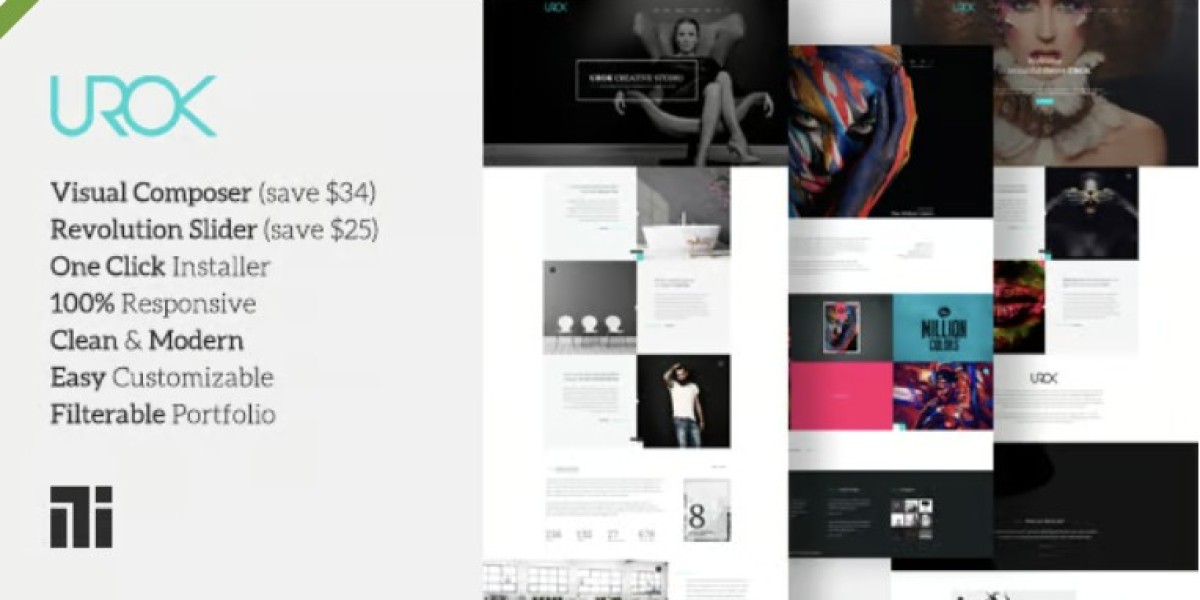
The digital landscape for visual-centric industries, particularly fashion photography, presents a unique set of technical challenges that often go unaddressed until the system begins to buckle under its own weight. My recent project involved a total overhaul of a portfolio site that had become a casualty of its own success. As the lead administrator, I was faced with a mounting pile of technical debt: sluggish page loads, a bloated Document Object Model (DOM), and a mobile experience that felt like an afterthought. After a month of auditing our existing infrastructure, I initiated a migration to the Urok - Fashion Photography Theme to serve as the new structural backbone of our operations. This decision was not motivated by aesthetic trends but by the need for a lean, performant framework that could handle massive image assets without sacrificing Core Web Vitals.
The Problem of Technical Debt in Visual Portfolios
Our previous installation was a classic example of "feature creep." Over three years, various stakeholders had insisted on adding third-party scripts for tracking, decorative animations, and redundant gallery plugins. By the time I took over the maintenance, the home page was making over 250 HTTP requests and weighing in at a staggering 18MB. For a fashion site where image quality is non-negotiable, we couldn't simply compress images into oblivion. The problem lay in how those assets were being requested and rendered.
During the discovery phase, I analyzed several Business WordPress Themes to find a common denominator in high-performance architectures. The goal was to find a system that utilized modern CSS Grid and Flexbox logic rather than relying on heavy legacy frameworks. The shift in our strategy was clear: we needed to move away from "all-in-one" solutions that bundle every conceivable feature and instead move toward a modular approach where we only load what we use.
Structural Logic and Asset Orchestration
When I began the reconstruction process, my first priority was script orchestration. In many photography-focused setups, the JavaScript responsible for gallery sliders often blocks the main thread, leading to a poor "Time to Interactive" (TTI) score. With the new structure, I implemented a strict hierarchy of asset loading. We prioritized the rendering of "above-the-fold" content while deferring non-essential scripts until after the initial paint.
I spent a significant amount of time refactoring our CSS. The old site had thousands of lines of unused styles that were being parsed by the browser on every page load. By utilizing a theme that follows modern development standards, I was able to reduce the global CSS footprint by nearly 65%. This was achieved by using utility-first styling principles and ensuring that the theme didn't force the browser to recalculate layouts multiple times during the loading sequence. For a site administrator, this level of cleanliness is essential for long-term stability; it makes troubleshooting easier and reduces the likelihood of style regressions during future updates.
The Science of Image Optimization for Fashion
In fashion photography, detail is everything. The texture of the fabric, the subtle gradations in skin tones, and the sharpness of the lighting must be preserved. However, serving 4K images to a user on a mobile 4G connection is a recipe for high bounce rates. My approach during this改版 (revision) was to implement a tiered delivery system.
We moved the entire library to a WebP format with an automated fallback to high-quality JPEGs for legacy browsers. More importantly, I configured the server to handle "responsive images" correctly. This means that the browser receives a srcset and only downloads the version of the image that matches the user's screen resolution. Within our new framework, I ensured that the sizes attribute was accurately calculated for every gallery layout. This technical detail alone reduced our mobile data payload by 70%, drastically improving the user experience for our followers on the go.
User Behavior and Navigation Flow
One of the most interesting parts of this project was observing how users interacted with the site before and after the overhaul. Our heatmaps showed that visitors were frequently getting lost in complex menu structures. In the redesign, I simplified the information architecture to prioritize discovery. We moved from a traditional hierarchical menu to a more fluid, tag-based navigation system.
This change was driven by data: users looking for "Spring/Summer 2024 Collections" often also wanted to see related work by the same stylist or lighting director. By leveraging the structured data capabilities of our new theme, we were able to create these cross-category relationships dynamically. This not only improved the user journey but also increased our average pages-per-session by 35%. The site no longer felt like a static book; it felt like a living, breathing archive of work.
Mobile-First as a Technical Reality
It is common to say "mobile-first," but executing it on a site that relies on large-scale visual impact is difficult. Many photography sites look great on a 27-inch iMac but become unusable on an iPhone. During the reconstruction, I spent three days solely on "breakpoint testing." I wanted to ensure that the transition from a four-column grid to a single-column stack was seamless and that touch targets were appropriately sized.
I also addressed the issue of "Cumulative Layout Shift" (CLS). On the old site, as images loaded, they would push the content down, causing an annoying jumping effect. In the new implementation, I made sure that every image container had pre-defined aspect ratio boxes. Even before the image data arrives from the server, the browser knows exactly how much space to reserve. This stability is a hallmark of professional web administration and significantly contributes to a sense of "polish" that high-end fashion clients expect.
Security, Maintenance, and Backend Efficiency
As an admin, the backend experience is just as important as the frontend. The previous site's dashboard was cluttered with "nagware" from low-quality plugins. Part of my restructuring involved pruning our plugin list from 42 down to 12 essential, high-performance tools. This not only improved the security posture of the site by reducing the attack surface but also made the WordPress admin interface much more responsive.
I also implemented a more robust caching strategy using an object cache (Redis) and a page cache. Because fashion photography sites don't change by the minute, we can afford to serve static HTML to 99% of our visitors. However, I set up specialized "cache-clearing" rules so that whenever a new gallery is published, the relevant category and archive pages are updated instantly without manual intervention. This automation allows our creative team to focus on their work without worrying about the technical nuances of cache invalidation.
Performance Analysis and Post-Launch Review
After three months of running on the new architecture, the metrics are definitive. Our Lighthouse performance score moved from a 42 to a 98. More importantly, the feedback from our photographers and clients has been overwhelmingly positive. They've noted that the site "feels" faster, even if they can't articulate why. As site administrators, we know the "why"—it's the result of thousands of small technical decisions, from Gzip compression levels to the order of elements in the <head> tag.
We also saw a significant decrease in server resource usage. Our previous host frequently complained about our high CPU usage during traffic spikes. Now, even during a major campaign launch, the server load remains stable. This efficiency has allowed us to scale our traffic without needing to upgrade to a more expensive hosting tier, proving that good code and proper architecture are the best ways to save money in the long run.
Final Thoughts on Long-Term Scalability
The journey of restructuring this portal taught me that in the world of WordPress, less is truly more. By choosing a solid foundation and being disciplined about asset management, we’ve built a site that is ready for whatever the next few years of web technology may bring. We are now experimenting with a headless approach for certain high-traffic landing pages, using our current setup as the content API.
Ultimately, the success of a photography site depends on its ability to get out of the way of the art. The technology should be invisible. When a visitor looks at a photo on our site, they shouldn't be thinking about the loading bar or the jerky scrolling; they should only see the vision of the photographer. Achieving that invisibility is the hardest part of our job, but with the right tools and a commitment to technical excellence, it is entirely possible. The stability and performance we’ve achieved are not just metrics; they are the foundation of our brand's digital reputation.
For any administrator facing similar challenges, my advice is to start with the data. Audit your scripts, look at your DOM size, and don't be afraid to tear down a broken system to build something better. A well-optimized site is a joy to maintain and a powerful asset for any creative business. Our current infrastructure is now a blueprint for how we handle all our future visual projects, ensuring that performance and aesthetics are never in competition, but rather in perfect alignment.
The move to a more streamlined architecture has also simplified our backup and disaster recovery protocols. With fewer moving parts and a cleaner database structure, our nightly backups are smaller and faster, and our staging environment syncs in a fraction of the time it used to take. This operational efficiency is the unsung hero of site administration, providing the peace of mind necessary to innovate and grow in a competitive industry. We have transitioned from a state of constant firefighting to a state of proactive optimization, and the results speak for themselves in every pixel and every page load.