
Precision Forming: How Vamp Moulding and Toe Moulding Machines Perfect Shoe Upper Shapes
In the sophisticated world of footwear manufacturing, shape is everything. The curve of a toe, the arch of a vamp, and the contour of a heel counter all determine how a shoe fits, feels, and appears. While lasting ultimately establishes the final form of a shoe, the foundation for that form is often created earlier through moulding processes that pre shape critical upper components. Vamp moulding machines and toe moulding machines represent specialized technology dedicated to this precise pre forming work, enabling manufacturers to achieve consistent, accurate shapes that simplify lasting and elevate final quality. For producers committed to excellence, understanding these machines and their capabilities is essential for optimizing production processes and delivering superior footwear.
The fundamental principle behind shoe upper moulding is elegantly simple yet technically sophisticated. Leather, synthetic materials, and composites all have thermoplastic properties that allow them to be reshaped when heated and then cooled while maintaining the new form. Moulding machines apply controlled heat to specific areas of the upper, then use mechanical pressure to press the material against a precision shaped die that matches the desired final contour. As the material cools under pressure, it retains this new shape, creating a component that already approximates its final form before lasting even begins. This pre forming capability dramatically reduces the work required during lasting and ensures that critical shape areas are consistent across every pair produced.
Vamp moulding machines focus on shaping the instep area of the shoe, which significantly affects both fit and appearance. The vamp covers the top of the foot from toe to throat, and its curve must accommodate the natural contours of the foot while providing a smooth, attractive appearance. When vamps are properly moulded before lasting, they conform readily to the last without stretching or distortion, reducing stress on the material and ensuring that the finished shoe fits as intended. This pre forming is particularly valuable for shoes with pronounced arch curves or for materials that resist stretching, where achieving the correct shape during lasting alone would be difficult or impossible.
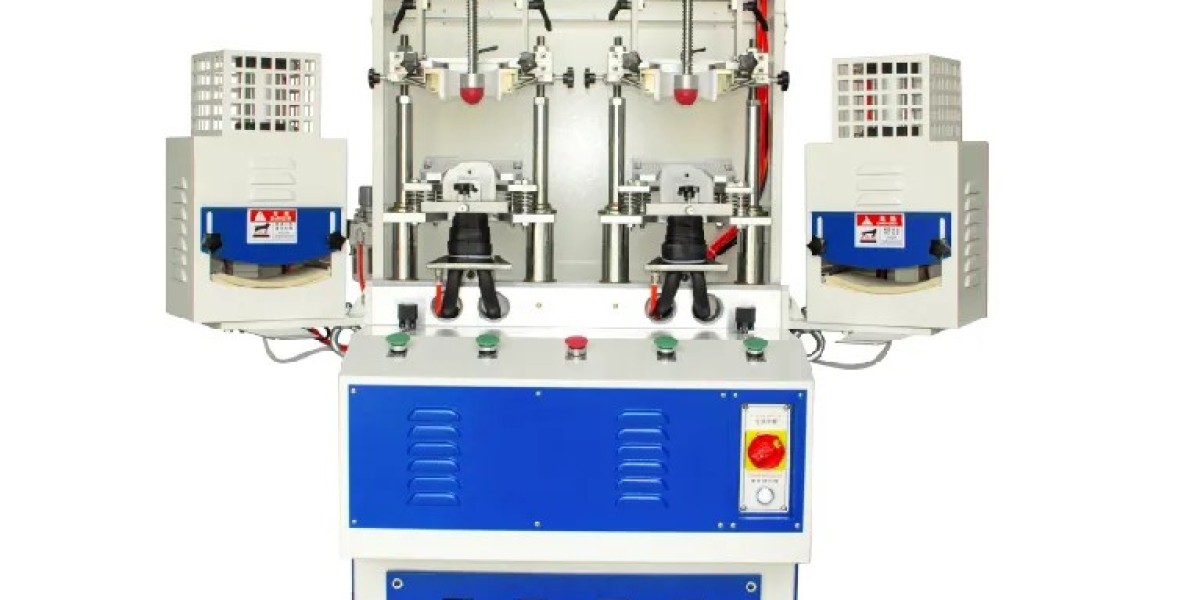
The operation of a modern vamp moulding machine demonstrates the precision engineering that characterizes contemporary footwear equipment. Operators load pre cut vamp components into the machine, positioning them accurately against registration guides that ensure consistent placement. The machine then closes heated dies that match the exact shape of the finished vamp, applying controlled temperature and pressure for a programmed duration. Sensors monitor both temperature and pressure throughout the cycle, automatically adjusting to maintain optimal conditions. When the cycle completes, the formed vamp emerges with a permanent curve that precisely matches the intended design, ready for stitching and lasting operations.
Toe moulding machines address the equally critical toe area, where shoe shape is most visible and where fit demands are particularly exacting. The toe spring, or upward curve at the front of the shoe, affects both appearance and walking comfort, while the overall toe shape defines the shoe's style character. Toe moulding machines pre form this area using dies that replicate the exact toe contour specified by the design. This pre forming ensures that toe shape remains consistent across all sizes and production runs, eliminating the variability that would occur if toe formation depended entirely on lasting operations.
The TH series of moulding machines available from leading Chinese manufacturers exemplifies the advanced capabilities of modern equipment. These machines incorporate digital temperature controls that maintain precise heating profiles for different material types, recognizing that leather requires different treatment than synthetic materials or specialized composites. Programmable pressure settings allow operators to match the forming force to material thickness and characteristics, ensuring optimal results without damaging delicate surfaces. And rapid cycle times support high volume production, with machines capable of processing hundreds of components per hour while maintaining consistent quality.
The relationship between moulding and subsequent lasting operations deserves careful attention from production planners. When uppers arrive at the lasting station with properly moulded vamps and toes, lasting machines can operate more efficiently and with less force. The reduced stress on both materials and machinery extends equipment life while protecting upper components from damage. The pre formed shape also improves consistency, as the lasting operation has less opportunity to introduce variation when the basic form is already established. This synergy between moulding and lasting represents one of the most effective ways to improve overall production quality while reducing costs.
Different upper materials respond differently to moulding processes, and understanding these responses is essential for achieving optimal results. Natural leather contains fibers that can be reshaped when heated and moistened, but excessive heat can damage the material's surface finish or internal structure. Synthetic materials may have specific temperature windows within which they become pliable without melting or degrading. Laminated materials with multiple layers require careful attention to ensure that all layers form together without delamination. Modern moulding machines accommodate these material variations through adjustable parameters and programmable profiles that operators can optimize for each application.
The integration of moulding equipment with other production machinery significantly affects overall workflow efficiency. In well designed factories, components move directly from cutting and skiving to moulding stations, then to stitching and lasting lines without intermediate storage that could allow materials to relax or absorb moisture. This continuous flow requires that machine capacities be matched and that workstations be positioned for smooth material transfer. When moulding machines, stitching equipment, and lasting machines come from the same trusted manufacturer, compatibility is assured and integration is simplified, allowing production engineers to focus on optimizing flow rather than resolving equipment mismatches.
Several factors deserve careful evaluation when selecting vamp moulding and toe moulding equipment for a specific production environment. Material types processed determine the temperature range and pressure capabilities required for effective forming. Production volumes influence whether single station machines or multi station rotary systems are most appropriate, with higher volumes justifying more automated solutions. Component size ranges affect die dimensions and machine throat clearance requirements. Changeover frequency between different shoe styles influences the value of quick change tooling systems that reduce downtime during production switches. And available floor space constrains machine size and configuration options, with some layouts better suited to inline configurations while others require compact, space efficient designs.
China has established itself as a global center for moulding machine manufacturing through decades of continuous development and refinement. Chinese manufacturers have mastered the thermal dynamics and pressure control systems that underlie effective material forming, developing reliable heating elements, precise temperature sensors, and durable press mechanisms that deliver consistent performance cycle after cycle. They have incorporated electronic controls that simplify operation while enabling sophisticated capabilities such as programmable forming profiles and automatic parameter adjustment for different materials. And they have built extensive sales and support networks that serve customers across multiple continents, ensuring that spare parts and technical assistance reach factories when needed. Companies like Guangdong Tenghong Machinery Technology Co., Ltd., located in Dongguan's thriving industrial region, exemplify this combination of technical capability and customer focus that has made Chinese moulding machinery the preferred choice for footwear producers worldwide.
The benefits of dedicated vamp and toe moulding extend throughout the manufacturing operation in ways that compound over time. Improved shape consistency reduces the fitting problems that can lead to customer discomfort and returns, protecting brand reputation while reducing warranty costs. Reduced stress during lasting extends the life of lasting machine components, lowering maintenance expenses and reducing unplanned downtime. Faster lasting cycles increase overall production throughput, allowing the same equipment to process more shoes per shift. And the superior shape definition achieved with pre forming enhances finished product appearance, supporting premium pricing and strengthening brand positioning in competitive markets.
The relationship between moulding temperature control and material preservation deserves particular attention from manufacturers committed to quality. Excessive heat can damage leather finishes, causing color changes or surface degradation that ruins appearance. Insufficient heat fails to achieve permanent shape change, allowing materials to relax back toward their original form after lasting. The optimal temperature window varies with material type, thickness, and finish, requiring equipment capable of precise adjustment and consistent maintenance of set points. Modern moulding machines with closed loop temperature control systems automatically compensate for ambient conditions and cycle to cycle variations, ensuring that every component receives exactly the intended thermal treatment.
Die design and quality significantly influence moulding results in ways that complement machine capabilities. Dies must match the intended shape exactly, with smooth surfaces that transfer heat efficiently while avoiding any imperfections that would mark the material. Die temperature must be uniform across the entire forming surface, eliminating hot spots that could damage material or cool spots that would prevent proper forming. Die alignment must be precise to ensure that pressure applies evenly across the component. When high quality dies combine with capable moulding machines, the resulting formed components achieve shape definition that would be impossible with lesser equipment.
Looking ahead, moulding technology continues to evolve in response to manufacturer demands for greater efficiency, flexibility, and capability. Recent innovations include machines with multi zone temperature control that applies different heat levels to different areas of the same component, accommodating variations in material thickness or forming requirements. Energy efficient heating systems reduce operating costs while maintaining the rapid response needed for high volume production. Quick change die systems minimize downtime between style changes, enabling economical production of smaller batches. And integration with factory management systems provides real time production data that supports continuous improvement efforts. These innovations ensure that moulding technology will remain central to quality footwear manufacturing for the foreseeable future.
For footwear manufacturers evaluating their forming operations, the decision to invest in dedicated vamp and toe moulding equipment carries implications that extend throughout the business. Improved shape consistency reduces the fitting problems that can lead to customer dissatisfaction and returns, protecting brand reputation while reducing costs. Faster lasting cycles increase production capacity, supporting growth without proportional increases in floor space or labor. Reduced material waste from forming failures lowers costs and supports sustainability goals that increasingly matter to consumers and regulators. And the superior shape definition achieved with precision moulding strengthens brand positioning in increasingly competitive markets. In an industry where form follows function but also defines fashion, investing in superior moulding technology creates lasting competitive advantage.
Guangdong Tenghong Machinery Technology Co., Ltd., with its comprehensive range of vamp moulding machines and toe moulding machines, offers footwear manufacturers the equipment and expertise needed to excel in this critical forming operation. Their machines combine the robust construction required for continuous industrial operation with the precision needed for consistent, accurate shape formation. Their team of experienced professionals understands the practical challenges of production floor management and provides the support that transforms equipment purchases into successful manufacturing capabilities. For any producer serious about quality, investing in superior moulding technology is not an expense but an investment in market position, customer satisfaction, and long term profitability.