
The Last Meter of Your Smart Factory: Why Your Palletizer Needs to Talk to MES
The Silent Data Gap in Modern Production Lines
Walk through any sophisticated manufacturing facility today, and you will see marvels of automation. Robotic arms assemble products with blinding speed. Conveyor systems whisk materials from station to station. Sensors monitor every parameter imaginable. Yet, at the very end of the line—the point where finished goods are stacked onto pallets for shipment—a strange silence often prevails.
In countless factories, the palletizing process remains disconnected from the digital nervous system that governs everything upstream. Manual logs replace digital records. Visual inspections substitute for real-time data. When problems occur, the trail goes cold at the warehouse door. This "last meter" of the production line has become a black hole for information, swallowing data that could otherwise drive continuous improvement, quality traceability, and operational efficiency.
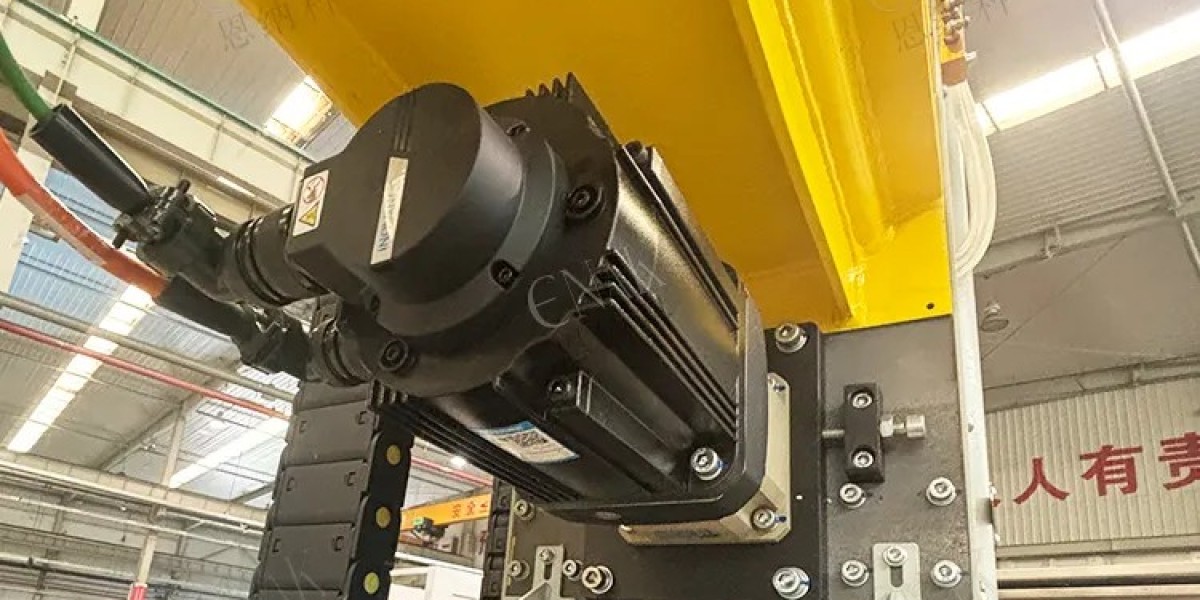
The solution lies not just in automation, but in intelligent integration. The ENK-MD1800-150 Single Column Automatic Carton Palletizing Equipment, engineered by ENAK (Tianjin) Automation Equipment Co., Ltd., represents a new breed of palletizing equipment designed to close this data gap. With its robust communication capabilities, intelligent algorithms, and self-diagnostic systems, it transforms the endpoint of production from a data desert into a vital information hub.
The Integration Imperative: Why Standalone Automation Is No Longer Enough
For decades, the goal of factory automation was simple: replace manual labor with machines to increase speed and consistency. A standalone palletizer that could stack cartons faster than a team of workers was considered a triumph of engineering. But in the era of Industry 4.0, that definition of success has expanded.
The Cost of Disconnected Operations
When palletizing equipment operates in isolation, several inefficiencies emerge:
- Upstream Overproduction: Without real-time feedback on palletizing capacity, upstream packaging machines may continue producing even when the palletizing queue is full, leading to product accumulation and bottlenecks.
- Inventory Blindness: Warehouse management systems lack accurate data on what has been palletized, when, and in what quantities, forcing reliance on manual counts and increasing the risk of shipping errors.
- Reactive Maintenance: Equipment issues are discovered only after they cause downtime, rather than being predicted and prevented through data analysis.
- Traceability Gaps: When quality problems arise, tracing affected products through manual pallet records is time-consuming and error-prone.
These challenges affect manufacturers across every sector. A food industry producer cannot afford to lose batch traceability when contamination risks emerge. A daily chemical industry manufacturer needs precise inventory data to serve retail clients with just-in-time delivery. An electronics industry supplier must document every step of production for quality certifications. The common denominator is the need for integration—and that is precisely what the ENK-MD1800-150 delivers.
Breaking the Silo: Seamless Production Line Integration
The ENK-MD1800-150 is designed from the ground up as a connected device, not a standalone machine. Its integration capabilities transform it from a simple pallet stacker into an active participant in the factory's information ecosystem.
Standard Communication Protocols for Universal Compatibility
One of the most frustrating aspects of integrating new equipment is dealing with incompatible communication protocols. Many manufacturers find themselves locked into single-vendor ecosystems or facing expensive customization projects to make different machines talk to each other.
The ENK-MD1800-150 eliminates this problem by shipping with industry-standard communication interfaces as standard equipment. Profinet, Ethernet/IP, and Modbus TCP are all built in, allowing the palletizer to connect seamlessly with upstream packaging machinery—carton formers, case sealers, wrapping machines—and downstream conveyor systems from virtually any major brand. This seamless production line integration means no additional interface customization is required, reducing installation complexity and cost.
Real-Time Data Exchange for Intelligent Coordination
Once connected, the ENK-MD1800-150 engages in continuous two-way communication with other equipment and management systems.
Upstream Communication: The palletizer monitors its own workload and feeding status, relaying this information back to upstream packaging machines. If the palletizing queue begins to back up, upstream equipment receives a signal to slow down or pause, preventing product accumulation and line jams. Conversely, when the palletizer has capacity, upstream machines are informed they can operate at full speed. This dynamic coordination eliminates the bottlenecks that plague disconnected lines.
Downstream Communication: Warehouse personnel no longer need to guess what is coming their way. The ENK-MD1800-150 transmits detailed pallet information—including content, batch numbers, production times, and pallet dimensions—to downstream conveyor controls and warehouse systems. This advance notice allows for better planning of forklift movements and storage allocation.
MES and WMS Integration: Closing the Data Loop
Perhaps most importantly, the ENK-MD1800-150 integrates directly with higher-level management platforms. It transmits real-time production data—output counts, palletizing efficiency, equipment status, and fault events—to Manufacturing Execution Systems (MES) and Warehouse Management Systems (WMS).
This integration delivers several transformative benefits:
- Data Visualization: Production managers can monitor palletizing operations from their desks, seeing exactly how many pallets have been completed, at what rate, and by which shift.
- Intelligent Production Scheduling: With real-time visibility into palletizing capacity, MES systems can optimize production schedules, balancing upstream output with downstream constraints.
- Automated Inventory Updates: As pallets are completed, WMS inventory counts are updated automatically, eliminating manual data entry and reducing errors.
- End-to-End Traceability: When a quality issue is detected, investigators can trace affected products from customer complaint back to raw material batch, with complete visibility into when and how each pallet was assembled.
For manufacturers operating in regulated industries or serving demanding customers, this level of integration is becoming not just an advantage, but a requirement.
Intelligent Pallet Pattern Management: Maximizing Every Inch
Integration addresses the flow of information, but the physical efficiency of palletizing matters just as much. How well does the machine utilize pallet space? How stable are the finished loads? These questions have direct financial implications.
Beyond Fixed Patterns: An Algorithmic Approach
Traditional palletizers rely on a limited set of pre-programmed stacking patterns. When carton sizes change, operators must manually select a new pattern from a menu—and if none of the preset patterns work well, they must accept suboptimal space utilization or invest time in custom programming.
The ENK-MD1800-150 takes a fundamentally different approach. Its intelligent pallet pattern management system incorporates a rich, mature algorithm library that goes far beyond simple preset patterns. When operators input carton dimensions, weight, and material characteristics, the system analyzes these parameters and automatically generates the optimal stacking scheme.
Diverse Patterns for Diverse Products
The algorithm library supports a wide range of stacking configurations, each suited to different product types:
- Layer-Staggered Patterns: By offsetting cartons in alternating layers, these patterns distribute weight evenly and prevent corner alignment that can lead to crushing. This is particularly valuable for products with moderate compression strength.
- Rotated Patterns: For irregular carton shapes or products with directional printing, rotated patterns allow optimal orientation while maintaining stack stability.
- Cross and Parallel Patterns: Simple but effective for uniform cartons, these patterns maximize speed while maintaining adequate stability.
The system selects not just a pattern, but the optimal pattern for the specific product characteristics. Light, crushable cartons receive gentler stacking configurations. Heavy, durable products may be stacked in more space-efficient arrangements. The result is consistently stable pallets that resist collapse during handling and transport.
Tangible Cost Savings
Better pallet patterns translate directly into lower costs. By maximizing pallet space utilization, the ENK-MD1800-150 reduces the number of pallets required for a given volume of product. Fewer pallets mean lower pallet purchase costs, reduced warehouse space requirements, and more efficient truck loading—each truck can carry more product, lowering per-unit transportation costs.
Equally important, stable pallets eliminate the "leaning tower" problem that plagues manual stacking and simple machines. Cartons that collapse during storage or transit create waste, delay shipments, and damage customer relationships. By ensuring every pallet is stable and secure, the ENK-MD1800-150 protects both product and reputation.
Intelligent Fault Diagnosis: Minimizing Downtime
Even the most reliable machines occasionally experience issues. When they do, the speed of diagnosis and repair determines the impact on production. The ENK-MD1800-150's intelligent fault diagnosis system transforms what could be hours of downtime into minutes of resolution.
Beyond Simple Error Codes
Many machines display error codes when something goes wrong. "Error 47" might appear on the screen, leaving operators to flip through manuals, guess at the meaning, and methodically check possible causes. This trial-and-error approach consumes valuable time and often requires experienced maintenance personnel.
The ENK-MD1800-150's self-diagnosis module operates at a higher level. By continuously monitoring operating parameters of core components—drive motors, gripping mechanisms, sensors, and actuators—it builds a real-time picture of machine health. When parameters deviate from normal ranges, the system doesn't just report a code; it identifies the specific fault location and nature.
Guided Troubleshooting
When a fault occurs, the HMI (Human-Machine Interface) displays:
- Exact Fault Location: "Gripping mechanism sensor abnormality" rather than a cryptic number.
- Fault Context: Which specific sensor, which axis, which operation was affected.
- Troubleshooting Guidelines: Simple, step-by-step instructions for verifying and resolving the issue.
For common faults, the system may even suggest likely causes based on operating history. A sensor that has been drifting for weeks might be flagged for preventive replacement before it fails completely.
Measurable Impact on Operations
This intelligent approach to fault management delivers measurable results. By eliminating blind troubleshooting and focusing maintenance efforts precisely where needed, the system reduces average repair time by more than 60%. For a high-speed production line, where every minute of downtime carries significant cost, this capability pays for itself many times over.
Equally valuable is the psychological impact on operators. Workers who might otherwise fear complex machinery become confident in their ability to handle routine issues, knowing the machine itself will guide them through the process.
Designed for Versatility: Applications Across Industries
The combination of intelligent integration, adaptive pattern management, and self-diagnosis makes the ENK-MD1800-150 suitable for a remarkably broad range of industries.
Food and Beverage Applications
In food production, diversity is the norm. Biscuits come in small cartons, beverages in larger cases, instant noodles in medium-sized boxes. The ENK-MD1800-150 adapts instantly to these variations, adjusting its stacking patterns and gripping force for each product type. Its hygienic design—with materials that resist corrosion and surfaces that clean easily—meets the strict sanitation requirements of food industry processing. Integration with MES ensures that every pallet's contents are tracked from production line to warehouse, supporting both inventory management and recall readiness.
Daily Chemical and Home Care Applications
Laundry detergent, shampoo, toilet paper—these products move in high volumes through daily chemical industry facilities. The ENK-MD1800-150's speed and reliability keep pace with demanding production schedules, while its integration capabilities enable precise matching of orders with palletized inventory. When a retail chain orders specific quantities of multiple products, the system ensures that pallets are assembled accurately, reducing order fulfillment errors.
Electronics and Electrical Appliance Applications
Electronics packaging presents unique challenges. Cartons for small appliances and components are often thin and lightweight, easily damaged by excessive force. The ENK-MD1800-150's precise control and adjustable gripping pressure protect these delicate packages while maintaining stacking speed. For electronics industry manufacturers operating in cleanroom environments, the machine's compact footprint and sealed construction minimize contamination risks. Integration with MES supports the detailed traceability requirements common in electronics quality management.
Addressing Real Concerns: FAQs from Prospective Buyers
Q: How does the equipment handle frequent size changes between production runs?
A: The intelligent pallet pattern management system makes size changes simple. Operators enter the new carton dimensions on the HMI, and the system automatically calculates the optimal stacking pattern and adjusts gripping parameters accordingly. No mechanical adjustments or programming are required, allowing seamless transitions between product runs.
Q: What if our existing production line uses older equipment without modern communication interfaces?
A: The ENK-MD1800-150 is equipped with standard protocols that can communicate with a wide range of equipment. For legacy machines without digital interfaces, we offer optional discrete I/O modules that allow basic coordination through simple electrical signals. Our engineering team can assess your specific situation and recommend the most cost-effective integration approach.
Q: How steep is the learning curve for operators accustomed to manual palletizing?
A: The machine is designed for intuitive operation. The HMI uses graphical displays and clear prompts to guide operators through setup and monitoring. Most operators become comfortable with basic operation within a single shift and proficient within a few days. We provide comprehensive training as part of our installation service.
Q: What kind of ongoing support can we expect after purchase?
A: ENAK provides a comprehensive after-sales support system including video technical support, online assistance, on-site guidance when needed, and free spare parts for covered items. The 3-year warranty reflects our confidence in the machine's reliability and our commitment to customer satisfaction.
Conclusion: The Connected Future of Palletizing
The transition from standalone automation to integrated intelligence is not a luxury—it is a competitive necessity. As manufacturing becomes more data-driven, the equipment at the end of your line must do more than stack boxes. It must communicate, adapt, and inform.
The ENK-MD1800-150 from ENAK (Tianjin) Automation Equipment Co., Ltd. embodies this new paradigm. With its seamless integration capabilities, intelligent pattern management, and self-diagnostic systems, it closes the data gap that has long plagued the "last meter" of production. It transforms palletizing from a cost center into a source of operational intelligence.
For manufacturers ready to take the next step toward true smart factory operations, this high-quality equipment from a leading China manufacturer offers a proven path forward. Whether you produce food, chemicals, electronics, or consumer goods, the ENK-MD1800-150 can help you achieve new levels of efficiency, traceability, and reliability.
To learn more about how this single column palletizer can integrate with your production line, or to request detailed price information and a customized solution, contact the sales team at ENAK today. The future of palletizing is connected—make sure your factory is part of it.