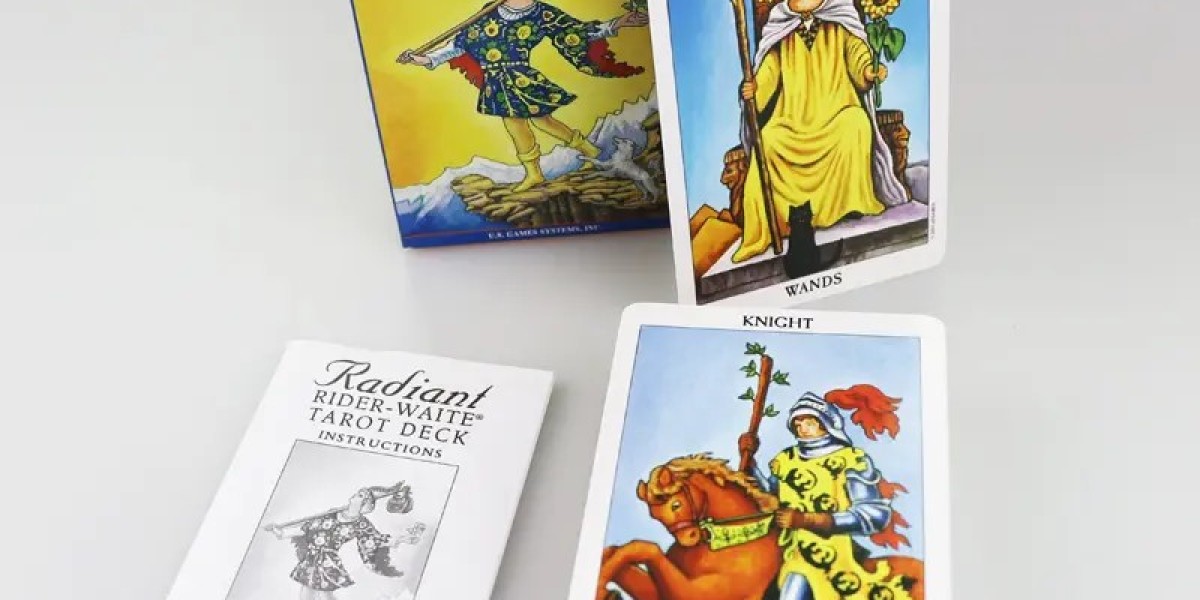

Why the Radiant Rider-Waite Tarot Is the Perfect Gateway for Today's Beginners
For over a century, the Rider-Waite-Smith tarot has served as the foundational text for tarot readers worldwide. Its imagery, developed by Pamela Colman Smith under Arthur Edward Waite's direction, established a visual language that transcends cultural boundaries and continues to inform virtually all modern tarot education. Millions have learned to read using these cards, and countless resources reference their symbolism as the standard.
Yet the original artwork, revolutionary for its time, presents certain challenges for contemporary beginners. The color palette, constrained by early twentieth-century printing technology, appears muted by modern standards. Some imagery reads as dark or somber to eyes accustomed to vibrant digital media. For sensitive newcomers, certain cards can feel intimidating rather than inviting.
The Radiant Rider-Waite Tarot addresses these challenges directly. By retaining every symbolic detail of the original while dramatically enhancing color saturation and brightness, this deck removes visual barriers without compromising educational integrity. This article explores why this approach creates the ideal learning tool for today's tarot beginners.
The Challenge of Learning with Historical Artwork
Learning any symbolic system requires engagement. Students must spend time with each card, studying details, noticing relationships, and internalizing meanings. When the artwork itself creates resistance—through darkness, muted tones, or imagery that triggers discomfort—the learning process slows.
Many potential tarot students abandon their exploration precisely because the standard deck feels unwelcoming. They sense the depth within but cannot connect with the visual presentation. The barrier exists not in the system itself but in its historical packaging.
For educators and retailers, this represents lost opportunities. Students who might become lifelong practitioners turn away at the first hurdle. Products designed for beginners must address this psychological reality.
Color as a Teaching Tool
The Radiant approach recognizes color as functional rather than merely decorative. Enhanced saturation serves multiple pedagogical purposes that directly benefit new learners.
Improved Symbol Recognition
Traditional Rider-Waite imagery contains dozens of symbolic elements within each card. Beginners must learn to identify wands, cups, swords, and pentacles across diverse contexts. They must distinguish the suits' energies through associated colors and imagery.
Brighter, more distinct colors make these identifications easier. The yellow of wands becomes unmistakable. The blue of cups carries consistent emotional resonance. High-contrast elements stand out against backgrounds, training the eye to notice what matters.
This accelerated recognition builds confidence quickly. Students who can identify suit elements within their first sessions feel progress, encouraging continued engagement.
Emotional Accessibility
The original Death card, while philosophically about transformation, visually depicts a skeleton in armor. The Tower shows figures falling from a burning structure. These images convey accurate meanings but can overwhelm sensitive beginners.
Enhanced brightness and saturation soften this impact without changing content. The same symbols remain, but the overall impression shifts from ominous to thought-provoking. Students can engage with challenging concepts without feeling personally threatened—a crucial distinction for psychological safety during self-exploration.
Memory Enhancement
Visual memory relies partly on distinctiveness. Cards that look similar prove harder to remember. By increasing color differentiation across the deck, the Radiant version creates more unique visual signatures for each card, supporting memory formation during study.
Preserving Every Symbolic Detail
The greatest risk when modifying classic artwork lies in accidentally altering meaning. Changing colors might obscure symbols, shift emphasis, or introduce unintended associations. Successful recoloring requires absolute fidelity to original content.
The Radiant Rider-Waite achieves this through careful attention to every element. Each card undergoes systematic comparison with authoritative references. No symbol disappears. No detail gets lost. The color transformation applies only to existing elements, never adding or removing content.
This preservation ensures that students learning with this deck can seamlessly transition to any other Rider-Waite resource. Books, courses, and online communities all reference the same imagery they have internalized. The deck becomes a gateway rather than a detour.
The Beginner's Psychological Journey
Understanding why this approach works requires appreciating the beginner's psychological experience when first encountering tarot.
The Intimidation Barrier
Many newcomers approach tarot with mixed feelings—curiosity mixed with apprehension. They may worry about "doing it wrong," encountering frightening predictions, or engaging with something that feels culturally foreign. These concerns create resistance that must be overcome before learning can begin.
A deck that appears friendly and accessible addresses this barrier directly. The visual presentation says "this is safe" before any cards are drawn. Students relax into learning rather than remaining guarded.
The Competence Building Phase
As beginners progress, they need tools that support rapid skill development. Clear imagery reduces cognitive load, allowing mental energy to focus on meaning rather than deciphering. Cards that communicate quickly accelerate the journey from confusion to competence.
The Identity Formation Stage
Eventually, beginners begin seeing themselves as tarot readers. This identity shift requires positive reinforcement through successful readings and enjoyable practice. Decks that consistently deliver satisfying experiences support this transformation.
Manufacturing Quality for Consistent Learning
Educational tools must maintain consistency across all units. Variations between decks would undermine learning, as students might encounter different visual experiences than those they studied.
Producing the Radiant Rider-Waite at scale requires manufacturing capabilities that ensure every deck matches the approved standard precisely. Color management systems calibrated to maintain saturation across entire production runs. Printing equipment that preserves fine details without variation. Quality inspection processes verifying every card before packaging.
Facilities in specialized printing centers like Dongguan have developed these capabilities through decades of serving international clients. Experienced manufacturers understand that educational products demand exceptional consistency, as variations directly impact learning outcomes.
The Guidebook Partnership
No beginner deck is complete without supporting educational material. The Radiant Rider-Waite includes a guidebook designed specifically for new learners, providing clear interpretations that complement the enhanced visual experience.
Effective guidebooks for beginners share several characteristics:
Accessible language avoids jargon without sacrificing accuracy. Terms get defined before use. Concepts build progressively.
Card-specific guidance offers both traditional meanings and practical applications. Beginners learn not just what cards mean but how to work with them.
Encouraging tone acknowledges that learning takes time. Mistakes become learning opportunities rather than failures.
Connection to imagery explicitly references visual elements, training students to read cards directly rather than memorizing keywords.
For creators developing custom educational decks, investing in guidebook development proves as important as card production. The two elements work together as an integrated learning system.
Market Positioning for Educational Products
Decks positioned for beginners require different marketing approaches than those targeting collectors or experienced readers.
Educational Channel Focus
Tarot teachers, workshop facilitators, and course creators represent valuable distribution partners. These professionals recommend specific decks to students, creating consistent demand from trusted sources.
Retail Placement Strategy
In bookstores and gift shops, beginner decks belong near introductory spirituality and self-help sections rather than exclusively in esoteric departments. Placement signals accessibility to casual browsers.
Bundle Opportunities
Pairing decks with journals, quick reference cards, or online course access increases perceived value and supports higher pricing while enhancing educational utility.
Content Marketing Support
Educational content—blog posts, videos, sample readings—demonstrates the deck's learning-friendly design while attracting potential customers through search and social discovery.
The Gateway Deck Concept
Perhaps the most important role of beginner-focused decks like the Radiant Rider-Waite is their function as gateways to broader engagement. Students who start with accessible decks often develop into collectors, acquiring multiple decks as their practice deepens. They purchase guidebooks, attend workshops, and recommend tarot to friends.
This lifecycle makes beginner decks strategically important beyond their immediate sales. They represent the entry point to entire product categories. Retailers and brands that capture beginners effectively position themselves for ongoing relationships as customers expand their engagement.
Customization Opportunities Within Educational Frameworks
For creators developing their own educational decks, the Radiant approach demonstrates several principles worth considering:
Respect the Core System
Modifications should enhance learning without altering fundamental meanings. Students must emerge with knowledge transferable to other resources.
Identify Specific Barriers
Different audiences face different challenges. Analyze your target learners carefully before deciding which aspects to modify.
Test with Real Beginners
Experienced readers often forget what confused them initially. Validate design decisions with genuine newcomers who represent your target audience.
Support Comprehensive Learning
Cards alone rarely suffice. Develop complementary materials that address the complete learning journey from first exposure to confident practice.
The Manufacturer's Role in Educational Quality
Creating decks that genuinely support learning requires manufacturing partners who understand educational requirements. Beyond technical capabilities, several factors matter:
Consistency commitment ensures that every deck in a production run matches approved samples exactly. Educational materials cannot vary without undermining learning.
Communication transparency keeps creators informed about production timelines and potential issues. Educational launches often coordinate with course schedules or retail seasons.
Quality orientation prioritizes educational utility over cost reduction alone. The cheapest option rarely serves learning best.
Experience relevance brings understanding of similar projects and their requirements. Manufacturers with educational deck experience anticipate needs that others might miss.
The Growing Demand for Accessible Spirituality
Broader cultural trends support the expansion of beginner-focused tarot products. Interest in personal spirituality continues growing across demographics. Traditional religious affiliation declines while individualized spiritual practice increases. Tarot offers structure for this exploration—a system with depth that rewards ongoing engagement.
Products that lower barriers to entry while maintaining integrity position themselves perfectly for this expanding market. They welcome newcomers without compromising the depth that retains them long-term.
Your Educational Opportunity
The Radiant Rider-Waite Tarot demonstrates that respecting tradition and embracing innovation need not conflict. By enhancing color while preserving every symbol, this deck serves beginners more effectively than either purely historical reproductions or completely original creations.
For creators considering educational tarot projects, several pathways exist. Develop recolored versions of classic imagery with proper licensing. Create original decks that teach standard symbolism through fresh artistic expression. Design companion materials that support specific learning approaches or audience needs.
Each path requires manufacturing partners capable of executing consistently while respecting educational requirements. Facilities with experience serving international clients understand these demands and maintain processes that meet them.
The market for accessible, beginner-focused tarot continues expanding. Students seek entry points that feel welcoming rather than intimidating. Products that deliver this experience build loyalty, generate word-of-mouth, and establish foundations for lasting customer relationships.
Your educational deck could become the gateway that introduces thousands to tarot's depths. With thoughtful design and capable manufacturing partnership, that contribution to the community awaits creation.