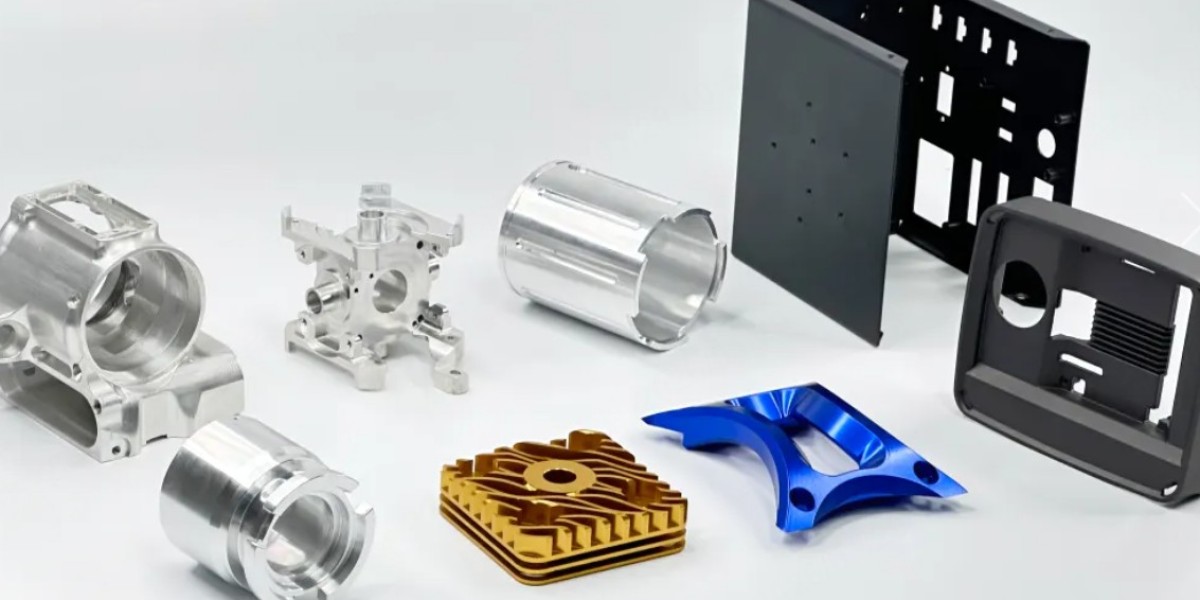

Dongguan BIE Hardware Co., Ltd stands at the forefront of precision machining, delivering high-quality CNC milling services for industries such as aerospace, medical devices, automotive, and industrial automation. In today’s competitive manufacturing environment, the ability to consistently produce components with micron-level accuracy is essential—not optional. Even minor deviations in CNC milling precision can compromise assembly, reduce component lifespan, or lead to costly rework. Understanding measurable indicators of precision and choosing a capable supplier are critical steps toward achieving reliable production.
Moving Beyond Subjective Judgments in CNC Milling
Historically, CNC milling quality assessment relied heavily on operator experience and visual inspection. While skilled machinists can identify gross defects, subjective evaluation is insufficient for modern high-stakes applications. Today, a data-driven, measurable approach is necessary to guarantee repeatable precision and functional reliability.
Dongguan BIE Hardware Co., Ltd implements a scientific evaluation framework that aligns with international standards, ensuring that every component meets tight tolerances. For high-value applications like turbine blades, orthopedic implants, or industrial valves, deviations as small as 0.01 mm can have significant functional and safety consequences. This underscores the importance of objective metrics to evaluate CNC milling performance.
The three fundamental indicators used to assess CNC milling precision include:
Geometric Accuracy – ensures the component conforms to its intended shape.
Positional Accuracy – validates that features are machined to their precise locations.
Surface Quality – reflects both process stability and tool effectiveness.
Together, these metrics provide a comprehensive picture of manufacturing capability.
Geometric Accuracy: Laying the Foundation
Geometric accuracy assesses how closely machined parts match their design specifications. It examines the machine’s static performance, including linearity of axes, orthogonality, and spindle stability. Without a reliable geometric baseline, even advanced compensation software cannot ensure part accuracy.
Testing for geometric accuracy typically includes:
Straightness and Flatness: Verified using laser interferometers or electronic levels to detect deviations along linear axes. Even 0.02 mm deviation can compromise component functionality in long-travel operations.
Perpendicularity and Angular Accuracy: Evaluated using precision squares or laser angle interferometers, crucial for complex cavity walls or angled surfaces.
Spindle Radial and Axial Runout: Measured with dial indicators or micrometer probes to ensure concentricity of holes and features.
By reviewing ISO 10791 or ASME B5.54 calibration reports, clients can confidently assess supplier geometric capability. At Dongguan BIE Hardware Co., Ltd, all CNC milling machines are routinely calibrated and maintained, guaranteeing baseline accuracy before production begins.
Positional Accuracy: Achieving Repeatable Performance
Positional accuracy measures the machine’s ability to reach commanded positions consistently. It includes positioning accuracy, the deviation from intended locations, and repeatability, the ability to return to the same position across multiple cycles. Repeatability is often more critical for batch production, ensuring uniformity across parts.
Key testing methods include:
Laser Interferometry: Provides highly precise measurements across the machine’s full travel, identifying deviations in linear and circular motions.
Ballbar Testing: Assesses circular interpolation accuracy and highlights servo or backlash issues.
Dongguan BIE Hardware Co., Ltd uses these advanced verification techniques to ensure positional integrity, which reduces misaligned features, minimizes assembly challenges, and maintains consistent product performance.
Surface Quality: The Final Indicator of Process Excellence
Surface quality reflects the overall effectiveness of the CNC milling process. It evaluates not only roughness but also the stability of the machine, tool condition, and cutting parameters. Common metrics include:
Ra (Arithmetic Average Roughness)
Rz (Maximum Profile Height)
Sm (Mean Spacing of Irregularities)
Testing methods involve:
Contact Profilometers for standard roughness measurements
Non-contact 3D White Light Interferometry for microstructure mapping and optical-critical components
High-quality, defect-free surfaces indicate proper tool maintenance, optimized feeds, minimal vibration, and stable environmental control. At Dongguan BIE Hardware Co., Ltd, surface analysis is integrated into process monitoring, enabling predictive maintenance and immediate corrective action when deviations occur.
Building a Comprehensive CNC Milling Assessment Framework
Achieving reliable CNC milling precision requires a structured evaluation framework:
Process Monitoring: Real-time measurement of cutting forces, tool wear, and vibration allows early defect detection.
Standards Compliance: Certifications such as ISO 9001 and AS9100 demonstrate adherence to internationally recognized quality systems.
First Article Inspections (FAI) and Full-Dimension Reports: Detailed documentation of critical dimensions provides a traceable reference for future production runs.
These steps ensure that each batch meets specifications and supports repeatable manufacturing outcomes.
Strategic Advantages of Partnering with a Precision Supplier
Scientific assessment of CNC milling precision is not only a technical requirement—it is a business advantage. Suppliers that invest in advanced measurement systems, maintain well-calibrated machines, and implement full-process monitoring deliver tangible value:
Reduced Scrap and Rework: Fewer defective parts reduce material waste and labor costs.
Enhanced Assembly Consistency: Accurate components simplify integration and reduce production errors.
Reliable Supply Chain Performance: Confidence in production stability allows better planning and customer satisfaction.
By collaborating with Dongguan BIE Hardware Co., Ltd, clients gain access to a comprehensive CNC milling ecosystem:
Geometric accuracy through calibrated machinery and regular maintenance
Positional accuracy via servo-controlled axes and laser verification
Surface quality through optimized tool strategies and environmental management
Conclusion
Evaluating CNC milling precision goes beyond subjective assessment. By systematically analyzing geometric accuracy, positional accuracy, and surface quality, manufacturers and clients can ensure consistent, high-performance components. Partnering with a supplier like Dongguan BIE Hardware Co., Ltd ensures access to verified processes, advanced technologies, and full-process quality management—translating technical precision into measurable business value.
Contact Information
Company Name: Dongguan BIE Hardware Co., Ltd
Phone: +86 134 1216 3649
Email: joycechen.chp@bie-machiningparts.com
China Address:
3rd Floor, Building 1, Urban Yunchuang Valley, No. 6 Keji Road, Fenggang Town, Dongguan City, Guangdong Province, China, 523690
Vietnam Address:
Ha Lieu Quarter, Phuong Lieu Ward, Que Vo District, Bac Ninh Province, Vietnam, 16814
Website: https://www.bie-machiningparts.com/